Tag Archives: binding off

Steeks, log cabin knitting, and a tidy bind off

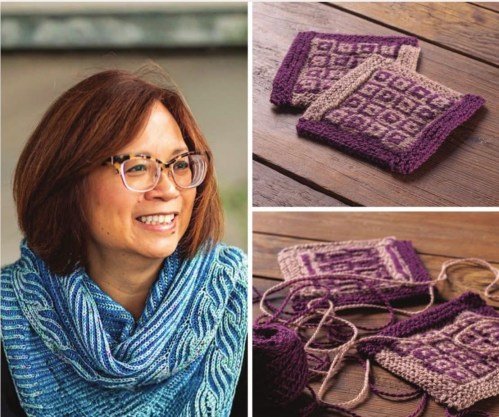
Collage of me and my Log Cabin Love steeked coasters

I’m very pleased to be teaching my second class with Modern Daily Knitting in January. It’s a workshop on cutting your first steek! We’ll be using my Log Cabin Love Coasters pattern, which also features a log cabin knitting border. That’s peak MDK. The virtual class is on Friday January 16. It will be on Zoom, and also recorded. You can register here.

While working on my log cabin edges, I’ve been annoyed by the loose stitch at the end of my bind off. It doesn’t matter in the middle of a project, because I’ll be picking up stitches all the way around the edge, but at some point there will be an outside edge that lets that loose stitch show.

I went poking around on the interwebs, and found a great tutorial by Patty Lyons on the Modern Daily Knitting site. She demonstrates five methods; some of them take pre-planning. All of them are shown with stockinette stitch, and they look great.

My favorite is the one that takes the least planning and effort. Yep, that’s me; git ‘er done. It does show a little bit more in garter stitch knitting, but I think I prefer that to having a loose stitch on the outside edge. I made a video for my log cabin knitting classes.

What do you think? Does that little blip bother you, or does the burble in the garter stitch bother you more? Knitter’s choice! I haven’t found a perfect solution, but this is good enough for me. For now. And I’ll definitely be using it for stockinette stitch.

Do you have a better way? I’d love to know that, too!

Suspended bind off tutorials

I often find that I need just a teeny bit more flexibility than I get with a standard bind off. My favorite long tail cast on is nice and flexible, and I don’t want my bind off to be tighter than my cast on.

First: How do I get my long tail cast on to be loose enough, but not sloppy? Leave space between the stitches as you add them to the needle. Don’t cinch them down tight on top of each other.

A suspended bind off suspends the moment that you drop the second stitch from the left needle in the bind off process. You can pull the yarn up to make a slightly bigger stitch when knitting that second stitch, and that also makes the bind off looser. Then you bind off the previous stitch before dropping the second stitch from the left needle. This bind off works in knit, purl, ribbing, whatever. It doesn’t matter if you’re knitting flat or in the round, either. It looks exactly like a regular bind off; it’s just looser. Here’s a video I made a while back.

Suspended Bind Off

What about brioche? Yes, it works for brioche, too. Sometimes I include what I call a closing row when knitting brioche, bringing those brioche stitches back to plain knits and purls. But if it affects my patterning (as in a decorative brioche increase/decrease patterning), I’ll opt to skip the closing row/round. Then I just use a suspended bind off incorporating those brioche stitches. I used this for my Aspen Leaf Brioche Cowl so that I’d have a nice edge for seaming, and no extra brioche above the last leaf motif. Here’s the new video.

Brioche Suspended Bind Off

I have other stretchy bind offs that I like, too. Jeny’s Super Stretchy Bind Off (good for ribbing), Elastic Bind Off (good for lace), Russian Bind Off…check out my tutorials page for all these and more.

What’s your favorite bind off?

Planned Pooling, now with Yarn Chicken!

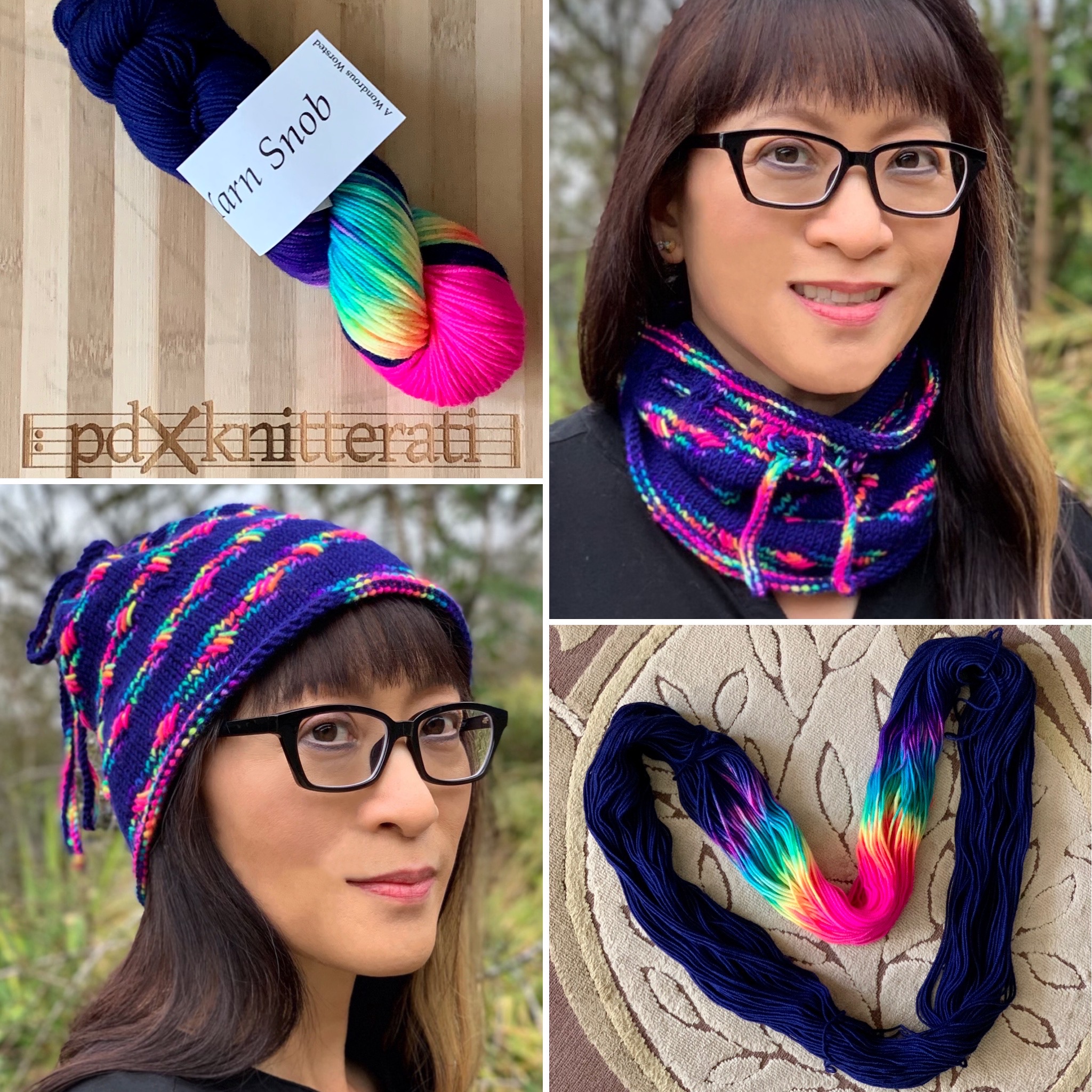
I finished my Planned Pooling cowl. It was an adventure!

I started by trying to stack the colors exactly. Then I loosened my gauge for a bit to get the colors to veer to the right (because the colors were starting earlier than before). Of course I had to veer back to the left, by knitting a little tighter for a bit. You don’t have to change gauge for the whole round, just enough to get the first stitches of the previous stacking to change. But you do have to keep checking to see what your colors are up to. Eventually I decided to stop paying attention and just let the colors dance, since I knew that they would more or less stack.

If you want matching cast on and bind off edges, you can use a provisional cast on, and then use your favorite bind off on both edges. The bind off colors won’t match the knitting exactly; binding off uses more yarn than a regular round of knitting. Since the colors weren’t going to match, I didn’t feel that fussy, so I used a long tail cast on and the usual bind off.

I ran out of yarn before the end of the bind off. Oops. I did have a little extra yarn left over from an overly cautious long tail cast on, so that saved the day.

Biscuit helped.

What can you do in real life if you run out of yarn, and there isn’t more? If you don’t need a stretchy edge, you can bind off without knitting. I know, wut? Slip the stitches instead of knitting them, like this.

Slip one stitch knitwise. *Slip another stitch knitwise. Lift the right stitch over the left stitch and off the right needle. Repeat from * to last stitch. Using a yarn needle, run a piece of yarn through last stitch and sew in ends.

This would have worked fine for my cowl, since a small area of of less stretchy edge wouldn’t have been too troublesome. But I wouldn’t have wanted it for the entire bind off. Not bad in a pinch, though!

Final thoughts on planned pooling. Well, it’s interesting! It’s kind of like a dance. I’m used to deciding what the yarn is going to do. Even when dancing, I’ve always been a back-leader! In planned pooling, the yarn is the leader and decides the size of the project because of the color repeat. This cowl is 32″ in diameter, which is kind of an in-between length for me. It’s 6″ tall, because that’s what one skein of this yarn made.

(DH and I are in a social swing dance class; he’s learning to lead and I’m learning to follow.)

I’d love to try making argyles, but realistically I know that I like to multi-task while knitting. That means I don’t like looking at my knitting all the time to make sure my tension is even and the colors are stacking properly. But it was a fun experiment. I’m thinking of designing a class on simple planned pooling. What do you think? Do you want to know just a bit about it? I think of it as party trick knitting! I do like knowing a little bit about a lot of techniques. Planned pooling was on my bucket list for this year, so I’m starting off with a bang!

For now I’ll say thank you to my project (very KonMari), and get on to my next project, which is…brioche!