
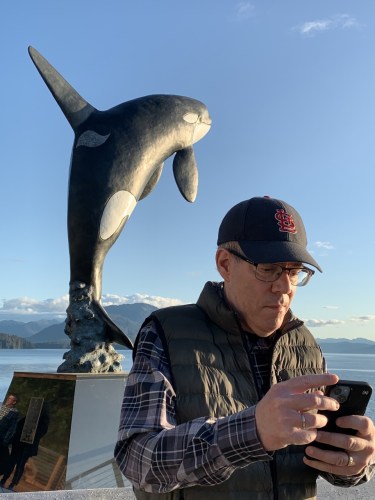
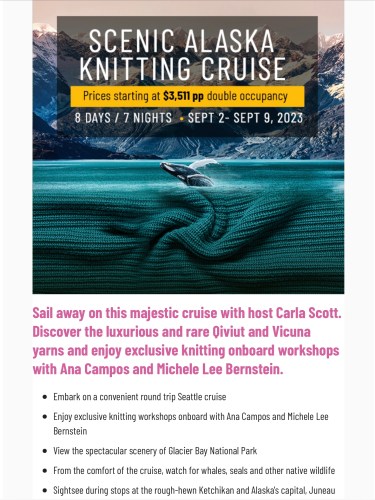
(I don’t have the photoshop skills to make it look like this orca is leaping from the water behind DH, so I’ll just let you imagine that it’s happening, while he obliviously checks his social media accounts. It’s a running joke.)
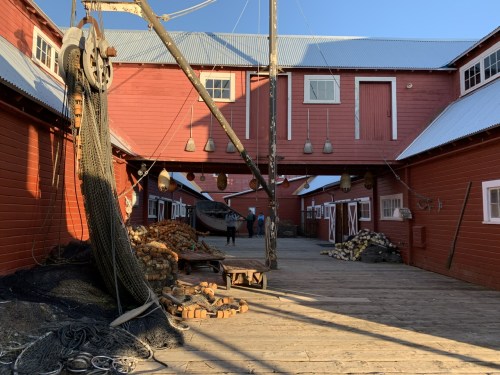
Icy Strait Point is at the lower end of Glacier Bay; you pass by going in and out. There used to be a cannery there dating from 1912, run by the Hoonah tribe. The town of Hoonah is about a mile away. Icy Strait Point as a cruise port was built specifically for the cruise trade, and is only open when a cruise ship is in port. There are three restaurants and a gondola ride to a higher gondola for a zip line tour. And a cannery museum and gift shop (of course). I was particularly interested in seeing the cannery museum, so I could show DH just what it was I was doing way back when.
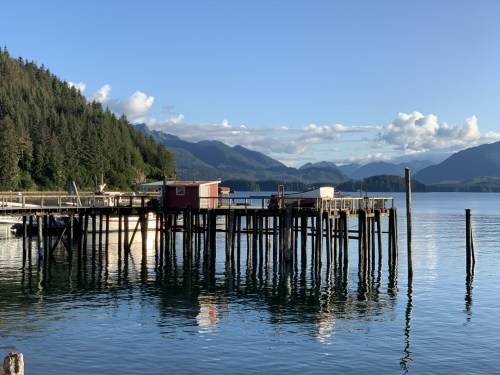
This photo felt nostalgically like cannery home…
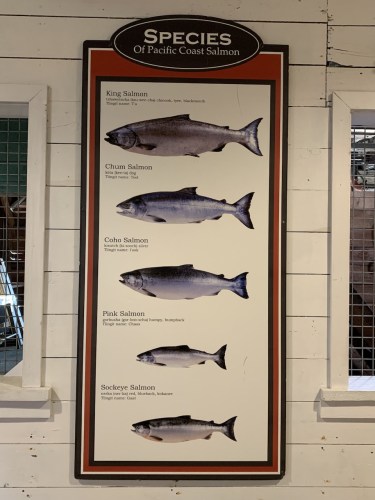
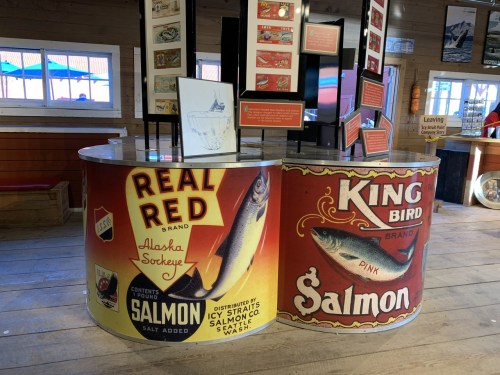
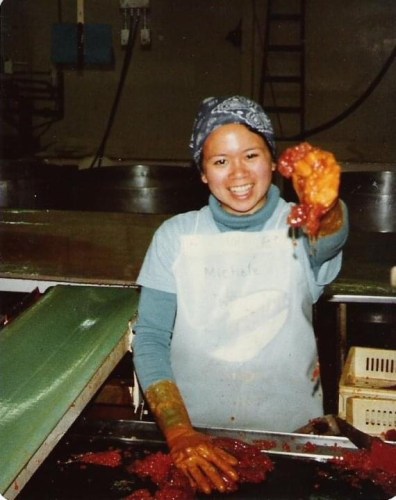
Our cannery on Kodiak Island canned mostly red (sockeye) and pink (humpies!) salmon. I never knew what the fish looked like; I worked up in the egghouse processing and packing salmon roe to send to Japan. I could identify which kind of salmon the eggs came from, though! The chum/keta eggs were the biggest, and you could sample the brined eggs right off the conveyor belt.
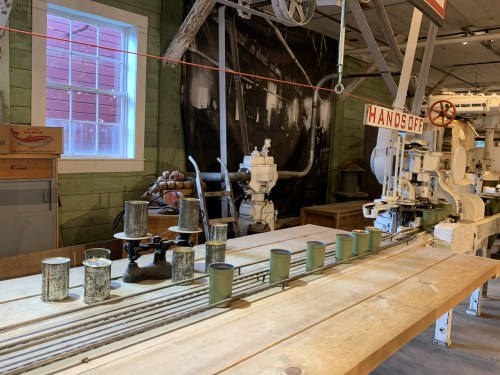
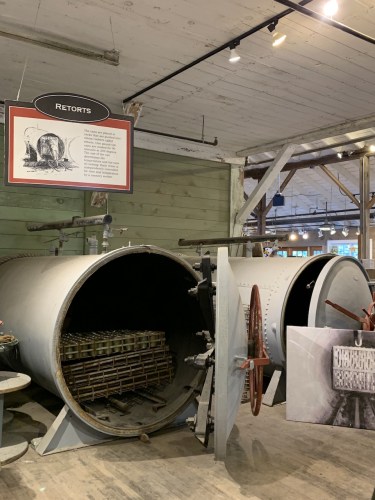
There was no reference to salmon eggs in the cannery museum, so I had to be satisfied with the fish cannery displays.
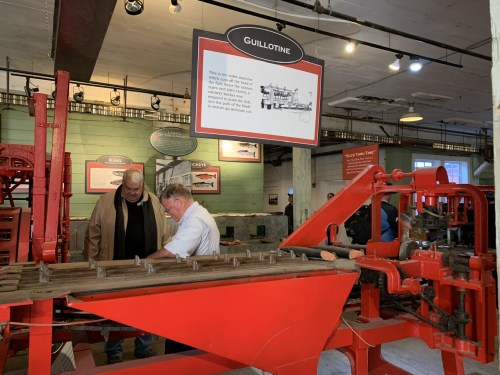
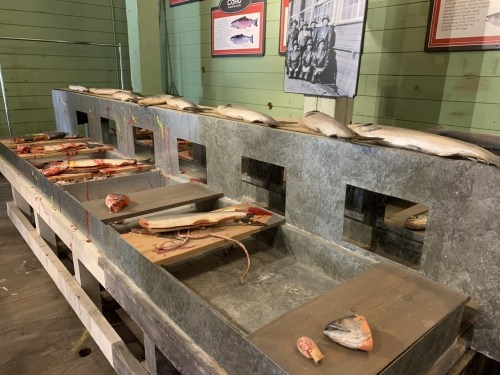
After the salmon heads were removed by machine, pullers removed the egg/milt sacs, and then the slimers cleaned the inside of the fish (oh, the sliming knife…). The butchering machines were known as Iron Chinks, because they replaced Chinese workers at the beginning of the 20th century and made the canning work much faster. Yes, it’s an offensive term. That’s history. I heard it when I worked in the cannery, and we heard it referred to in a cannery documentary that we watched at a museum in Ketchikan.
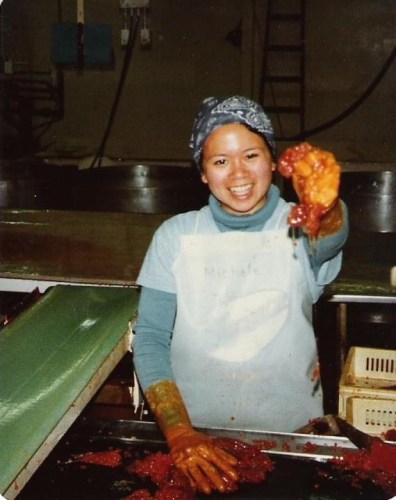
We (my friends and family) always called them lines: How many lines are we running today? We could process anywhere from 40,000 to 120,000 fish per day, given enough overtime. We made our money on overtime, and there was nowhere to spend it. The cannery was the only thing on Alitak Bay at the end of Kodiak Island; we arrived for the summer by seaplane from Kodiak, and lived in bunkhouses and were fed in mess halls. We made friends and had dance parties! I worked in the egghouse for five summers, and that’s how I paid for college.
It’s a very far leap from egghouse girl to knitting designer/teacher!
On to Sitka!
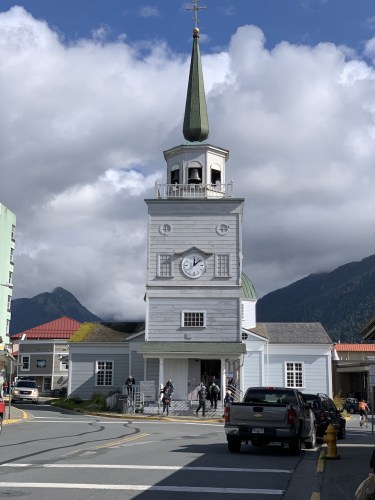
Sitka was the capital of the Russia’s Alaska colony from the 1700’s until 1867; it was called New Archangel. This building is a reconstruction of the original 1848 building which burned in 1966. Sitka is still the Seat of the Diocese of Alaska for the Russian Orthodox Church. This building is part of the Sitka National Historical Park, as is the Totem Trail we visited.
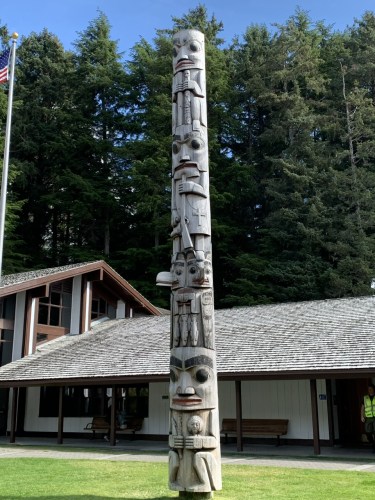
The Bicentennial Pole stands in front of the Visitors Center. It was carved by Duane Pasco, who won a contest to depict 200 years of Pacific Coast Indian cultural history. Read from the bottom up: The Native people before the arrival of Europeans, Raven and Eagle (the Tlingit moieties or clans), the arrival of Europeans (see the firearms?), and the top figure representing the Northwest Coast Indians of today.
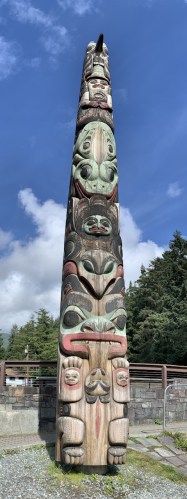

I thought this was a raven, but further research indicates that it’s most likely a cormorant. It’s a recarving by Tommy Joseph; the original pole was obtained in 1903 from a Tlingit village (that sounds ominously colonial, and it probably was).
We actually went the wrong way on the Totem Trail loop, so we didn’t see as many totem poles as we had planned to. But it took us to a footbridge over the Indian River, which was full of salmon headed upriver to spawn. Or perhaps they were spawning right there.
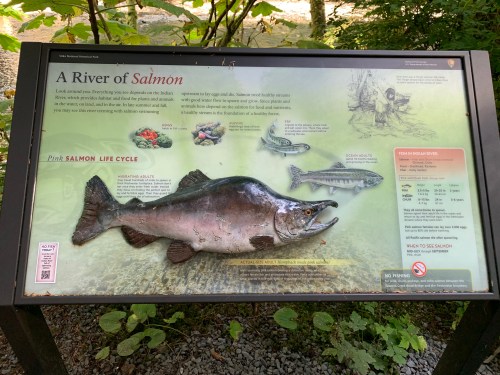
Walking to and from the Totem Trail, we saw salmon jumping in the water.
Back to the boat!
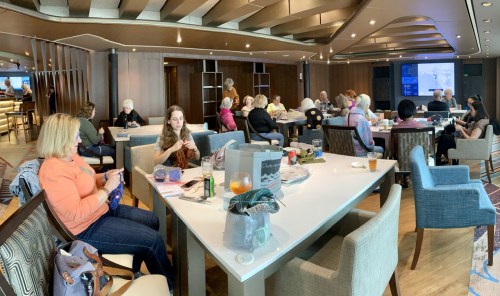
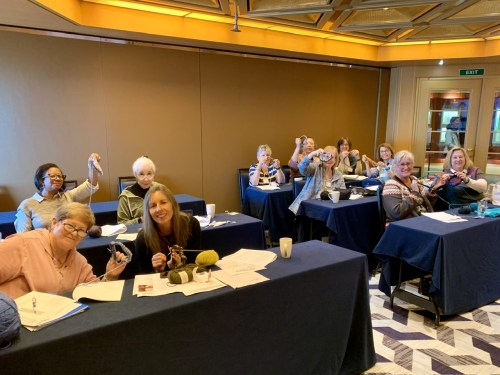
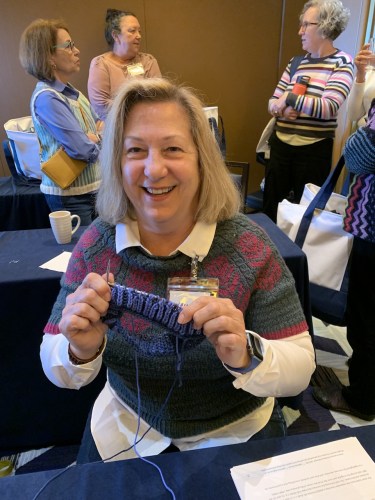
The VK knitters joined the Holland America knitters meet up in the art studio. This is on the 11th floor, off the Crow’s Nest lounge which looks out front.
The next day we visited Ketchikan, which was my favorite town. (Glacier Bay was my favorite stop overall.)

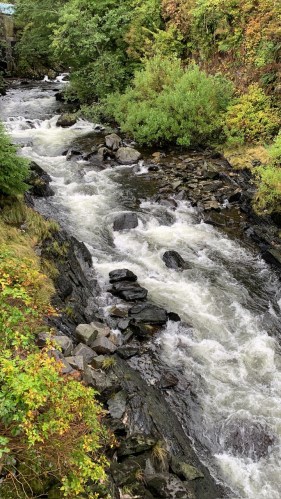
I liked that you could see how the town had grown up on the creek, and that they have tried to preserve it. The green house is a preserved bordello, Dolly’s.
We saw salmon heading upstream, and a hungry seal planning its dinner.
I had a great visit at the yarn shop, Fabulous Fiber Arts and More. We also visited the Tongass Historical Museum, which showed Alaska’s history as a Native fish camp, mining hub, salmon canning capital, and timber town.
Can you tell that I like science, history, and museums? The National Parks app was a great help on my phone. Cruise ports are full of souvenir and jewelry shops, which don’t interest me. But I can figure out how to have a good time anyway!
We spent the rest of that day cruising to Victoria, British Columbia. We were in port from 8 to 11:30 pm, so we opted to stay on board and pack. The next day we spent at sea headed back to Seattle, so it was time for another knitting class. Ana and I swapped students, and we now have more brioche knitters, and Portuguese-style knitters too.


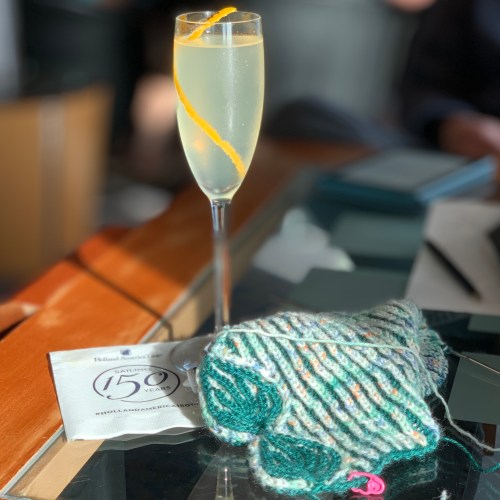
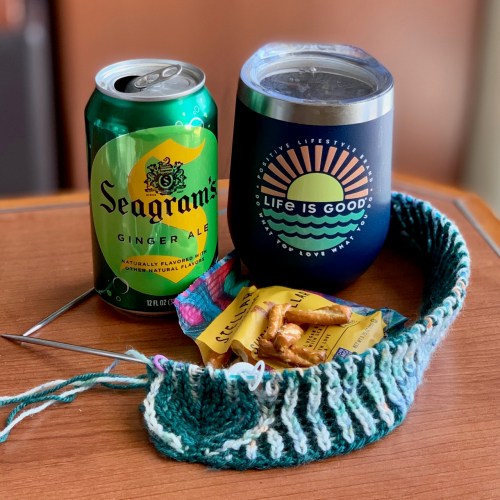
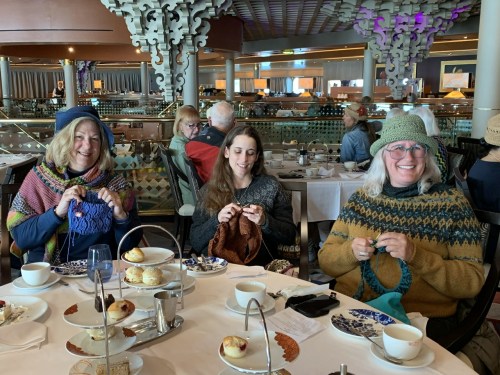
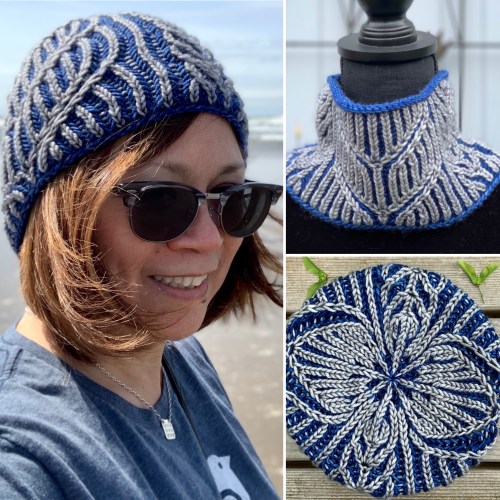
This bit of brioche was my social knitting for the cruise. It’s not hard, basically brioche rib with just a little bit of thinking at the edge. It turns out this is just a swatch; I’m playing with a design idea and the rib needs shaping, and a different needle overall. But it was great to have on this cruise.
I really enjoyed this trip! I hope you enjoyed the travelogue. Onward!







 PDXKnitterati