Category Archives: tutorial

Thrumbelina KAL begins today!

We’re casting on for a Thrumbelina KnitALong today! This KAL is not a mystery KAL. All the information you need is in the pattern. We’re sharing questions, tips, progress…

thrumbelina2

Before you cast on, you should read through your pattern for information on how to thrum. You can also watch my thrumming video on youtube.

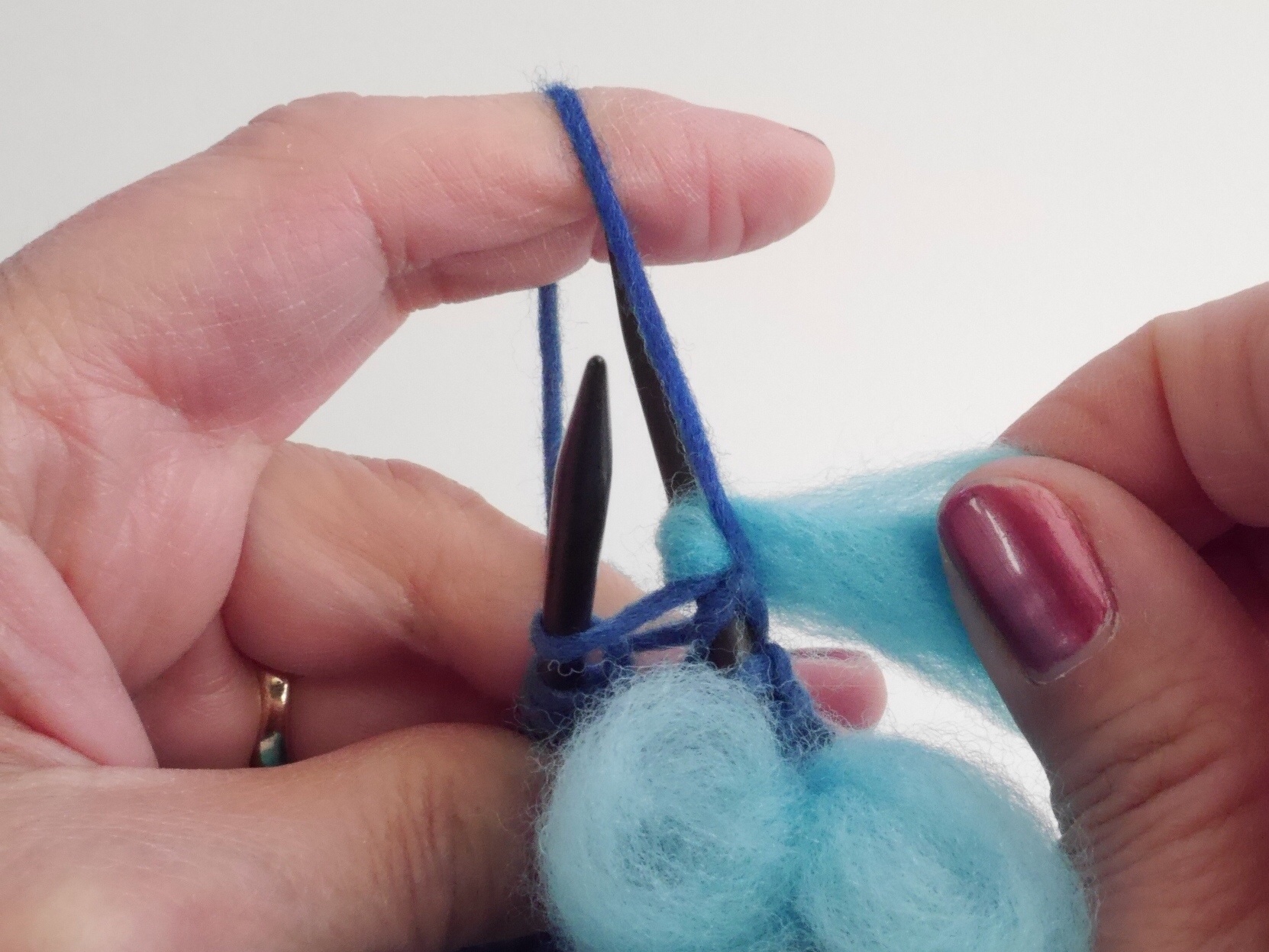
I just made an extra tutorial on a tip for continental style knitters.

Just remember, it’s important to make sure your working yarn wraps around the thrum, rather than coming up underneath it.

continental thrumming

Edited to add: The Thrumbelina pattern is on sale for 25% off ($4.50 instead of $6) through the end of January. Click here to purchase through Ravelry. I meant to do this earlier, but I forgot! If you purchased this pattern during the month of January, I’ll be contacting you.

Who’s casting on with me? Come join the discussion in my Ravelry group!

Don’t worry; I’m still knitting the Rose City Yarn Crawl Mystery Shawlette KAL. But I’m caught up until the next clue comes out on Friday.

Knit on!

KAL color musings

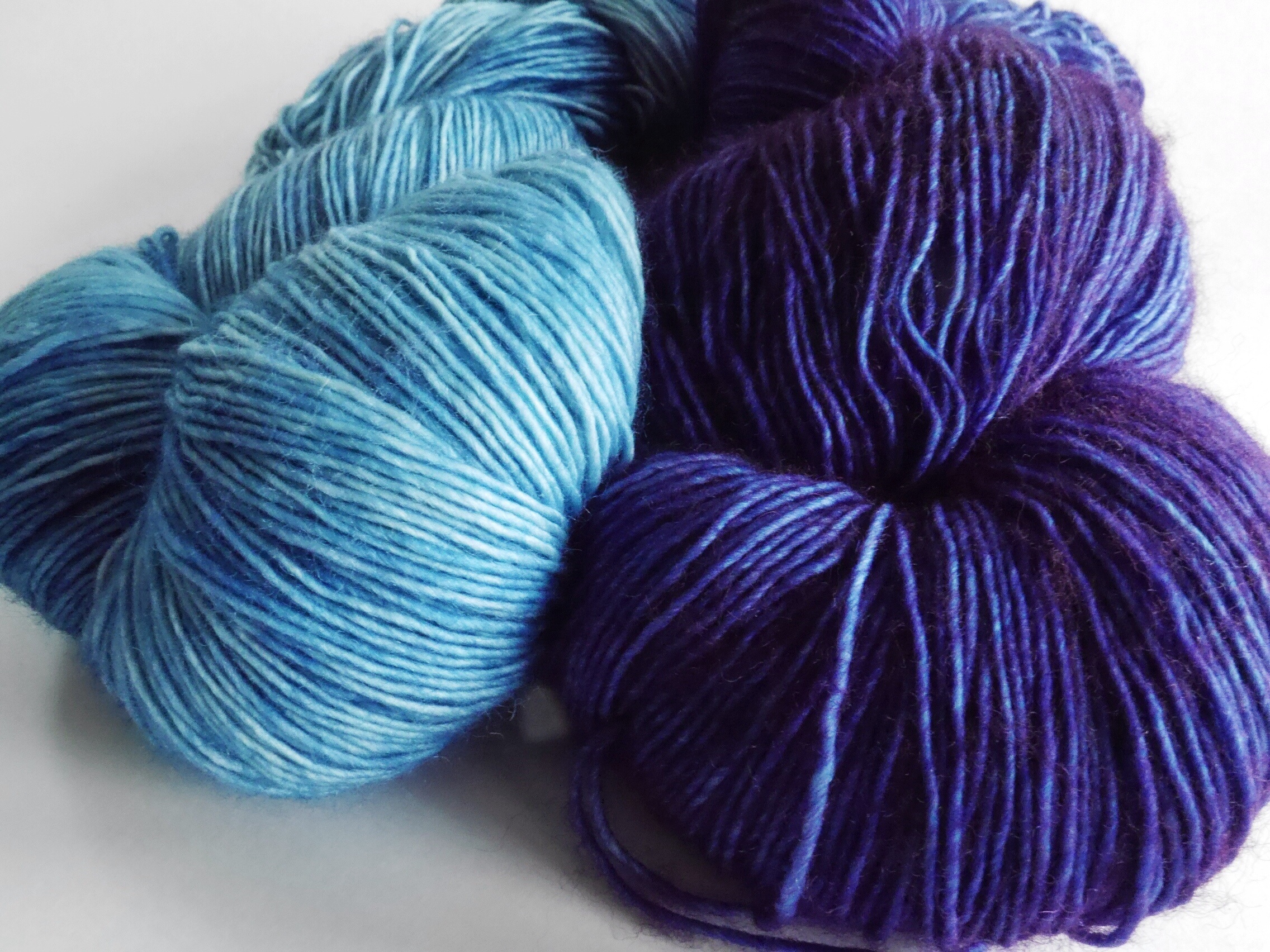
The Rose City Yarn Crawl MKAL kicks off tomorrow morning. Here’s my new yarn…

RCYC MKAL colors

I’m using Knitted Wit Single Fingering, Tugboat and Clematis. I was going to use the paler color for the sky (MC), and the darker color for the roses, but…

What if the darker color is the sky at night, and the roses are white roses that look blue in the moonlight?

If I turn it around that way, the dark color would be the MC, and the MC is slightly predominant, and I LOVE this deep purplish blue/bluish purple…

Guess I’ll have to decide by tomorrow!

Just in case you need help with your garter tab cast on, I made a video just for you. (youtube link)

Hope to see locals at Twisted for the cast on party, Friday January 17, 5-8 p.m.!

Also, the winners of the Thrumbelina patterns are…

Lucinda and jrbecca! I’ll be sending patterns along through Ravelry shortly. The Thrumbelina KAL begins on Tuesday, January 21. Pop over to the Ravelry discussion and tell me what yarn/fiber combo you’re planning! Here’s mine. This is Knitted Wit Merino single ply in Winter’s Night, and her merino fiber in Turks and Caicos.

image

(Gee, I wonder what my favorite color is?) Are you ready to cast on? I am, and I am!

Blocking lace tutorial: magic!

Blocking is magic for lace knitting. You may think that your project is finished once it’s off the needles, but that’s when the fun really begins. The true beauty of lace doesn’t show until you go through the finishing step of blocking.

Some of us are finishing up our Garland KAL shawls. I’m blocking Garlands for a couple of my local KAL knitters, as well as my own. Here are a couple Garland Shawls before

Untitled

Untitled

and during blocking.

Untitled

Untitled

After:

image

image

image

Magic!

I thought I’d walk you through blocking on blocking wires, if you haven’t done it before. If you don’t have blocking wires, it’s also possible to do this using string in place of the wires (I’d use mercerized cotton, or linen), but I prefer the stiffness of the wires. Don’t weave in your yarn ends until after blocking. There’s going to be a lot of stretching going on.

Let’s get started!

First, I soak the knitted garment in the kitchen sink with a little bit of Soak, my favorite non-rinse wool wash. Use warm water and allow the garment to soak for at least 20 minutes to relax the fibers.
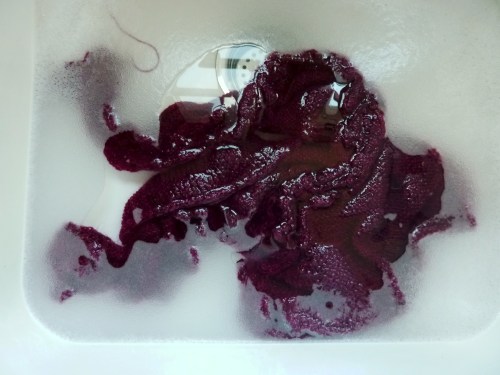
image

The garment is really saturated and stretchy at this point! Support it from underneath, and squeeze out as much water as you can with your hands. Do not twist or wring. Next, lay it on a folded towel, fold the towel over that, and walk all over it. Really. This will get most of the water out.

The next step is to thread the straight edges onto the blocking wires. I put the wires along the top edge, going over and under the garter ridges. If you have an especially long edge, you would use two or three wires to cover the length, but overlap the wires by an inch or so at the place(s) where they meet. I know that you may consider this top edge to be a curve, but it works fine to block it straight, and it’s much easier to pin out this way. Triangle shawls are straight along the top; heart shaped shawls can be blocked straight along the top, too. Crescent shawls like my Webfoot or Filigree? I like to pin them all around, no wires.
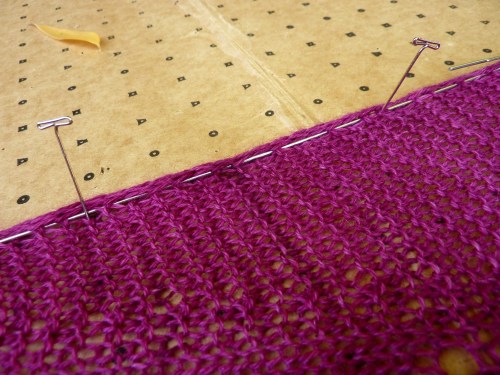
image

Now the fun begins. Stretch out the garment so that the lovely laciness shines! Use the metal t-pins that came with the blocking wires to hold the wires in place. You’ll need to be working on a surface that can take your pins. In the summer, I’ve been using my old Dritz cardboard cutting board on a table outside. The cardboard is getting tatty after being pinned a bazillion times, but it still works. In the winter, I block on a futon sofabed in the basement. There are also blocking mats that you can purchase specifically for this purpose, and I’ve seen knitters use foam interlocking alphabet blocks, too. (A useful child’s toy, but be careful, some of the colors may transfer to your yarn.) Knitter’s choice!

If you’re pinning out points, you run the wires through the points like this,
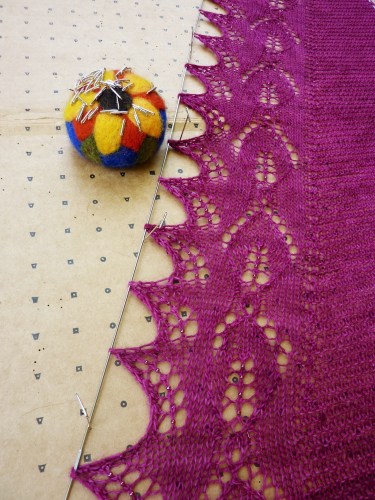
image

or you can pin each point out separately, like this center point.
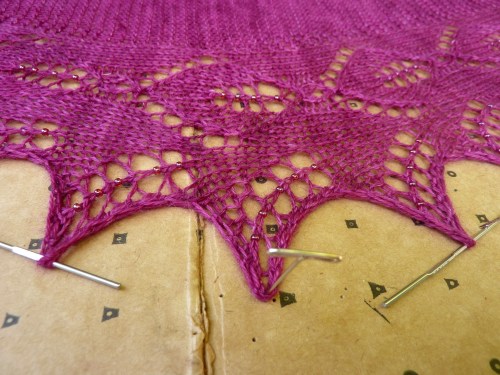
image

I pinned out each point of my peacock green Garland, but only because I forgot that I could run wires instead! Wires are much faster to set up.
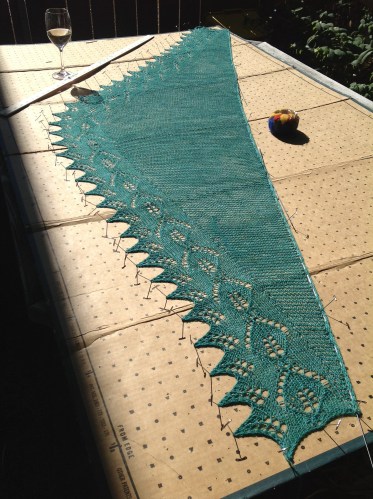
image

Let the garment dry completely, and then un-pin. Sew in your ends. The result? Instead of a crumpled wad of knitting, you have a diaphanous piece of gossamer loveliness.

Do you block your lace? Aggressively? I hope so!

Free and easy…Victoriana bracelet pattern

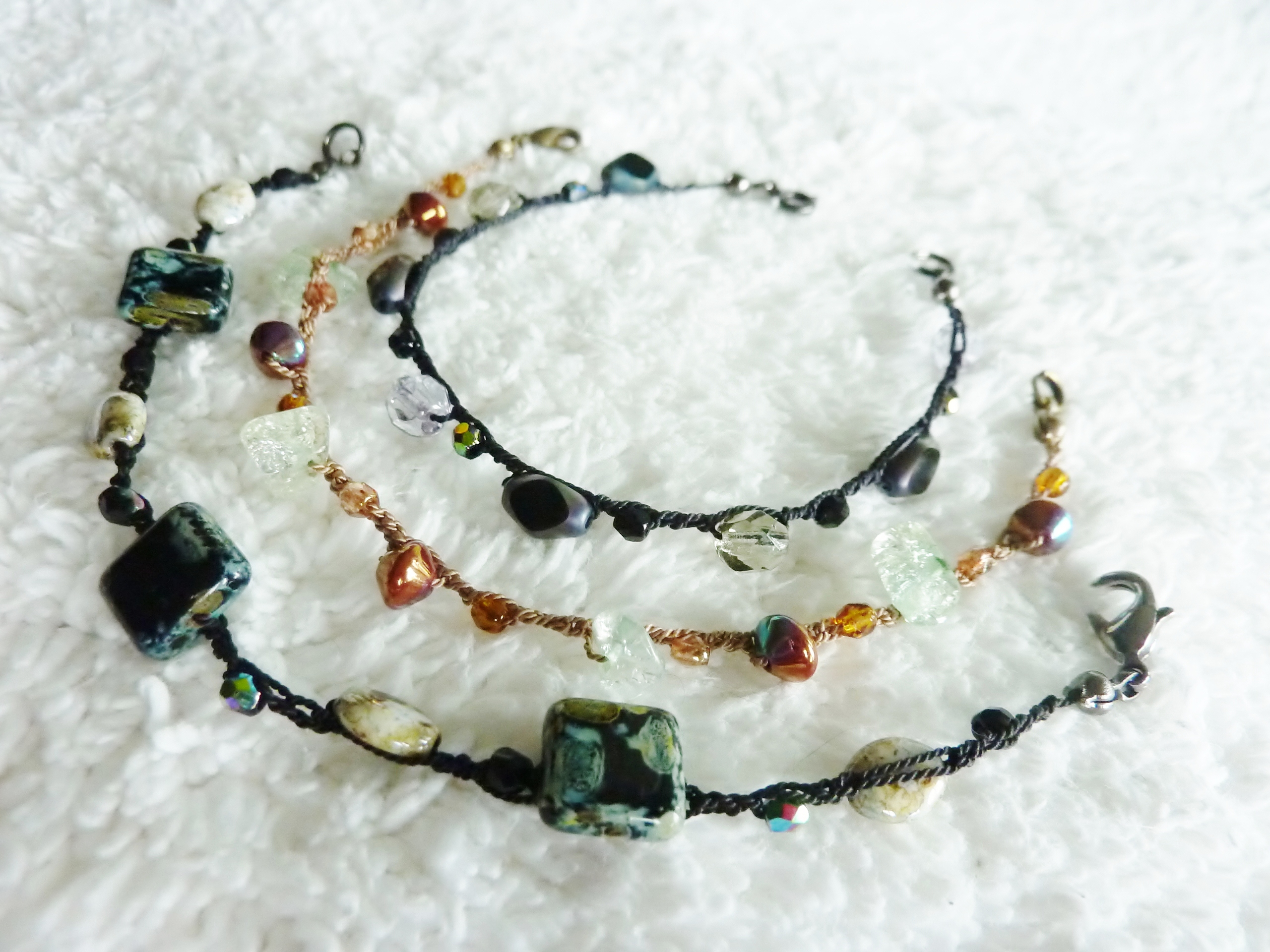
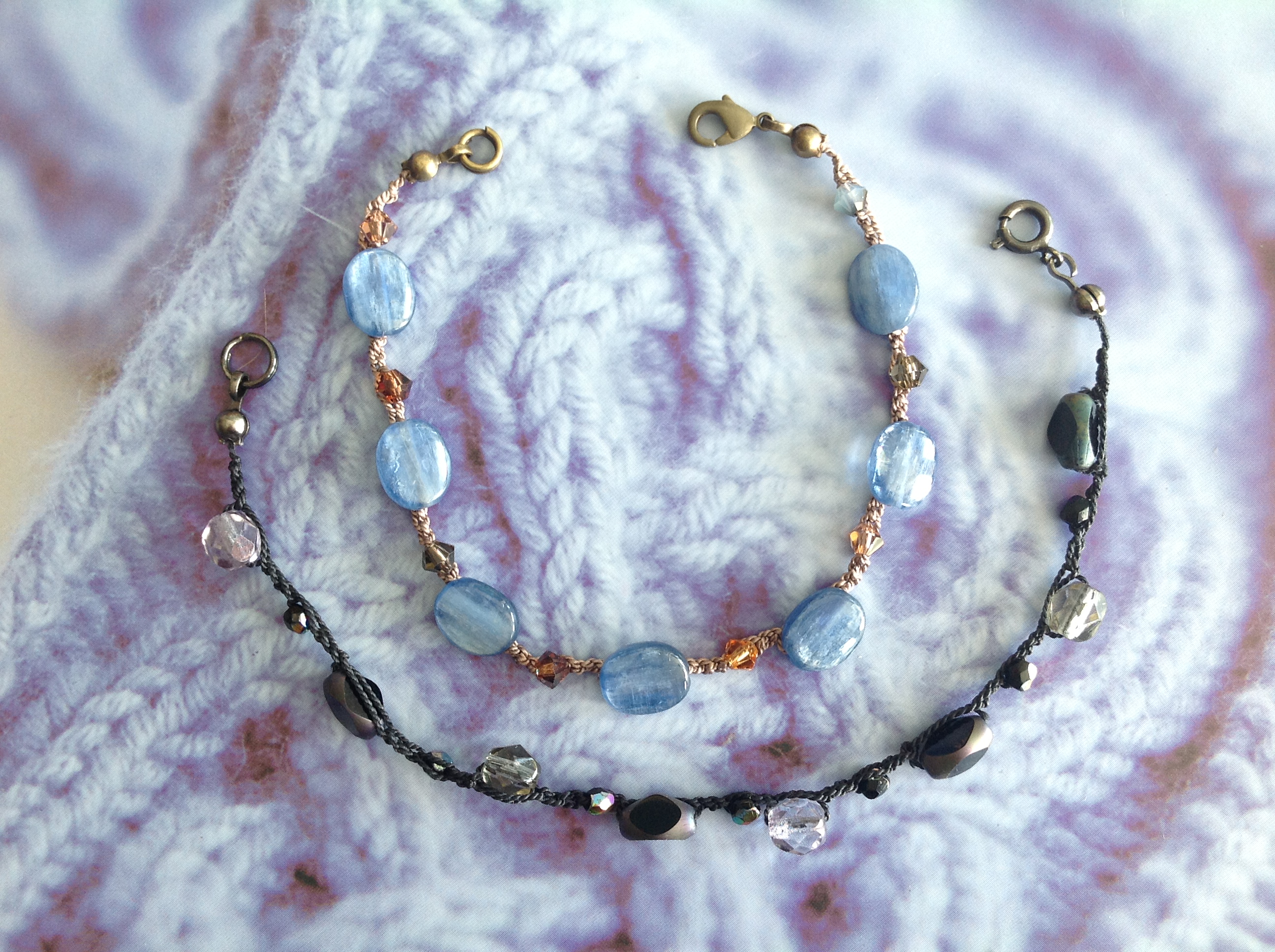
My crochet beaded bracelet class didn’t happen Saturday; not enough people signed up for it. I did these at a party last week with my Crafty Moms group, and we had a great time. I’m guessing that this project may be a better bead store offering than a yarn store offering, and that’s ok.

All dressed up and no place to go? I wrote a pattern for the class, but it’s so simple that I’m going to offer it as a freebie. You can download it here. Victoriana

These bracelets are simple and quick, and they make great gifts. The fun is in choosing just the right beads for your project.

I use pre-threaded silk cord, because it’s easier to thread beads with small holes (no doubling the cord back through a needle), but do as you like. The only stitch used is a crocheted chain stitch; we had several non-crocheters at our gathering and they had no problem learning this simple stitch. Gauge is not an issue; you just go until it’s long enough.

Enjoy!

Hugs and Kisses Fingerless Mitts

You may remember these fingerless mitts that I knit for my sister’s Christmas gift.

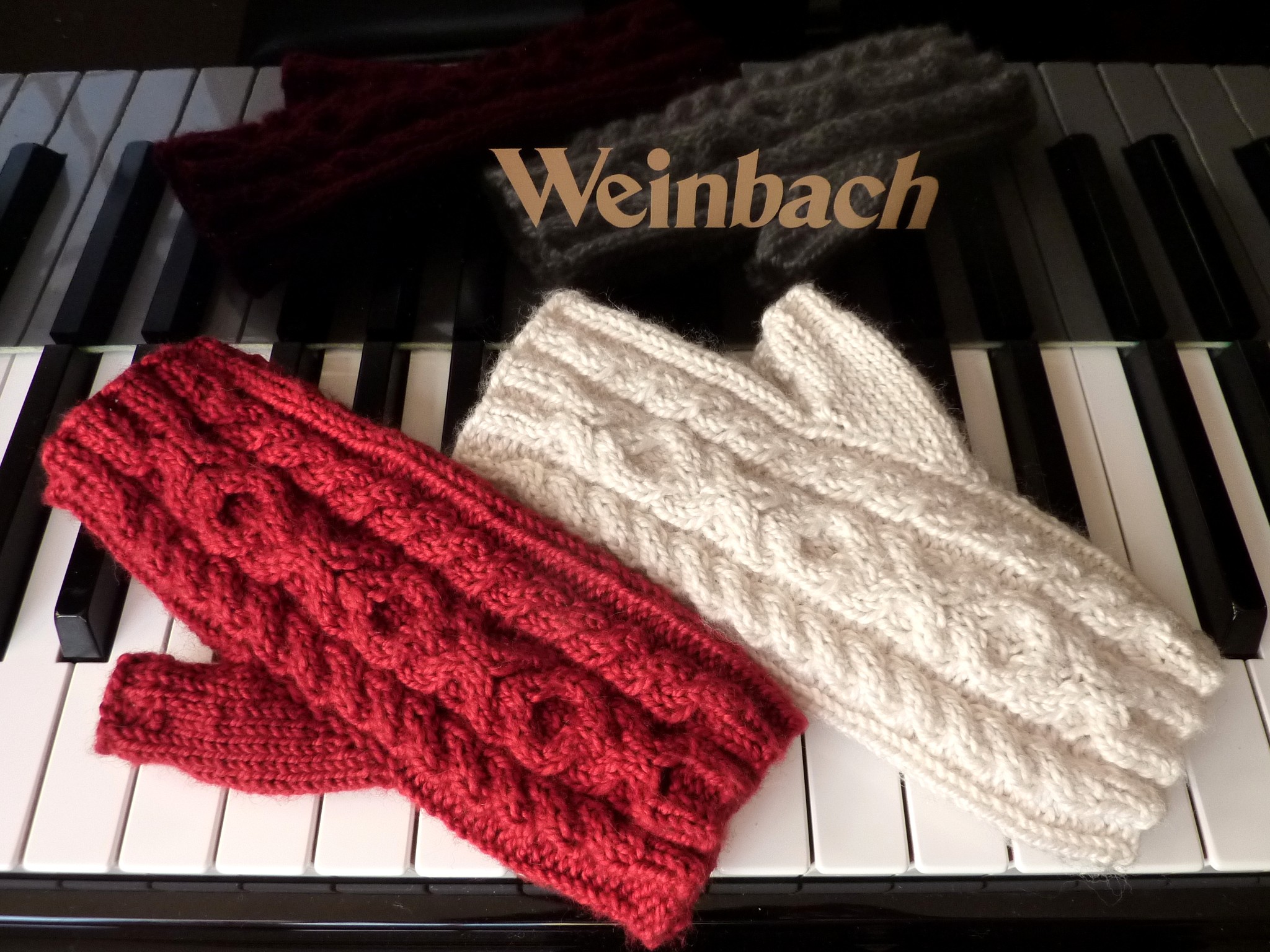
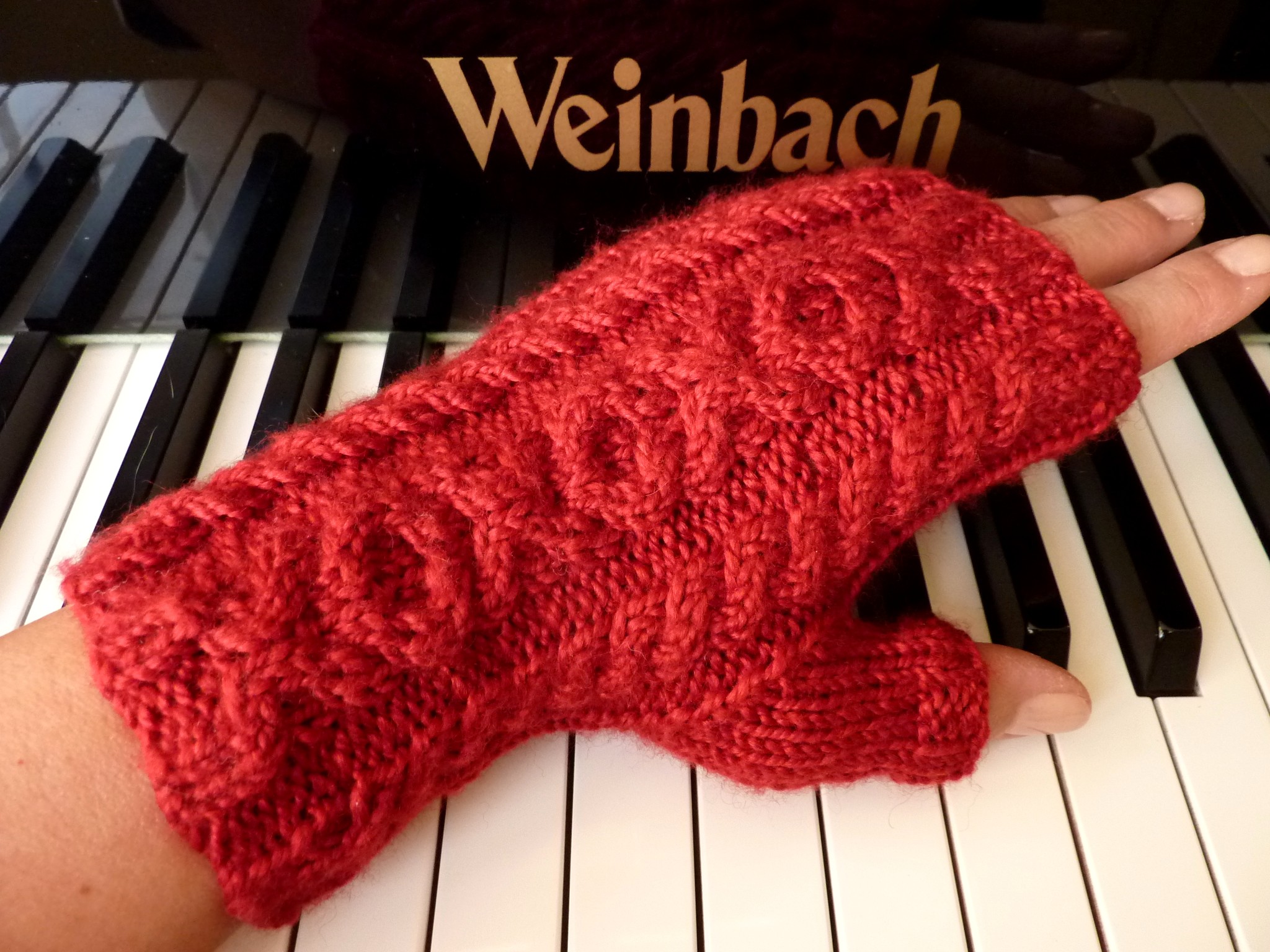
oxo cable fingerless mitts

I finished editing the pattern yesterday. It’s been tested by some of the wonderful test knitters in Ravelry’s Free Pattern Testers group. (The FPT group is a great resource.) I’ve included links in the pattern to my new tutorials on paired lifted increases and cabling without a cable needle. You can see all my tutorials on my tutorials page.

More information about the pattern is available here.

Happy knitting!

Knitting with two colors, right hand

I’ve been saying for a while that I wanted to make a video of how to do this, and I finally did it. Sorry for the slight blurriness; my arms aren’t long enough to get further in front of the camera! I’ll experiment with other set-ups some time, but this is my first video, warts and all. It was kind of fun.

I’m a thrower; I carry my yarn in my right hand. I took a colorwork class with Anna Zilboorg at Stitches some time in the 90’s. In preparation, I taught myself to knit continental style (hold yarn in left hand, pick with right needle) so I could carry a color in each hand. When I got to class, Anna showed me how to carry both colors in my right hand, which was a lot easier for me. Here it is.

Enjoy!