Tag Archives: lace knitting

Orenburg Lace class at Black Sheep Gathering

I took a little road trip down to Albany, Oregon on Saturday to visit Black Sheep Gathering. This year is the 50th year of this fiber festival, but it was my first time ever. I wanted to take a class with Galina Khmeleva, master lace knitter. We’ve been at many of the same festivals, but I’m usually teaching instead of taking classes. This was my chance!
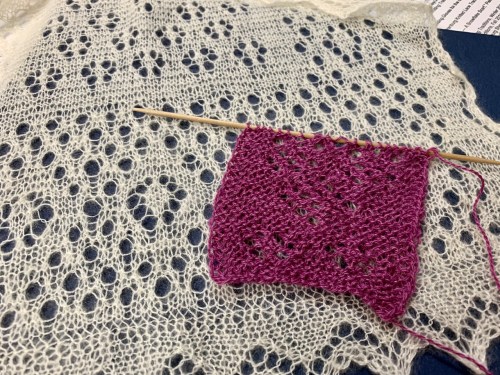
Orenburg lace is knit with 10 different motifs, combined in many ways. It’s usually on a garter stitch background. Some motifs have patterning only on the right side rows, and some have patterning on both right and wrong side rows. All the stitches are either knit, yo, k2tog, or k3tog. There’s no directionality to the decreases; the work is so fine that it really doesn’t show.

We didn’t have time to knit through all the motifs, but the magic is really in the combining. We knit our swatch samplers with Jaggerspun Zephyr, a laceweight blend of wool and silk, 1120 yards/100g. Skinny, but not hard to knit with. I knit my swatch on US 2 needles, and I loved the stitch definition.
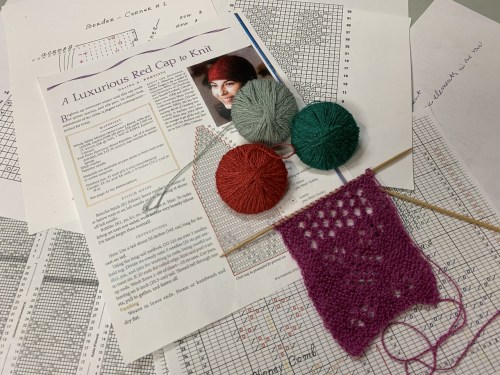
Handouts!

Galina gave us enough handouts to keep us busy for years to come. And she regaled us with many stories of the history of Orenburg lace, and more.
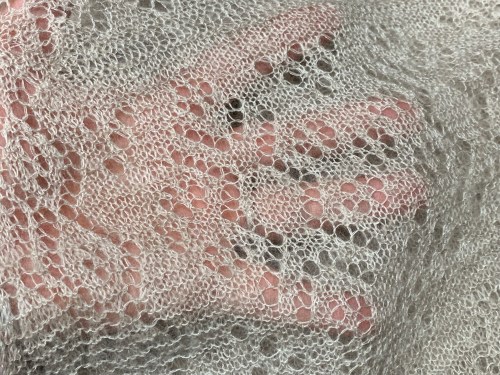
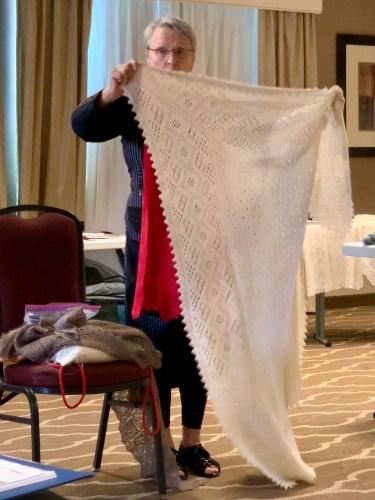
Orenburg shawl

Gossamer web, indeed!

Orenburg warm shawl

The Warm Shawl is a heavier version of Orenburg lace. Simpler patterning, but it’s not really that heavy, either. It’s knit in pieces and grafted together with a special grafting method, which was the subject of the next day’s class. Alas, I was not staying over.

I did visit with the sheep in the barn, and also viewed the fiber work exhibits.
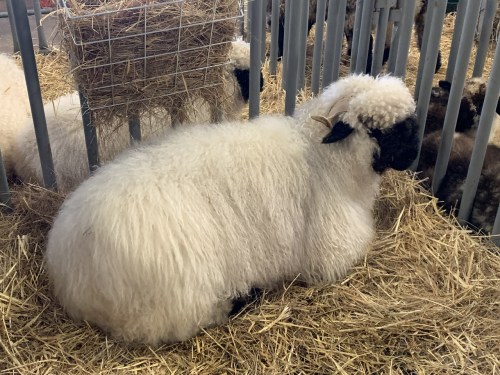
Sorpresa, a Valais Blacknose sheep

Look at this beautiful wool! This is Sorpresa, a Valais Blacknose sheep from Honey Hoof Ranch.
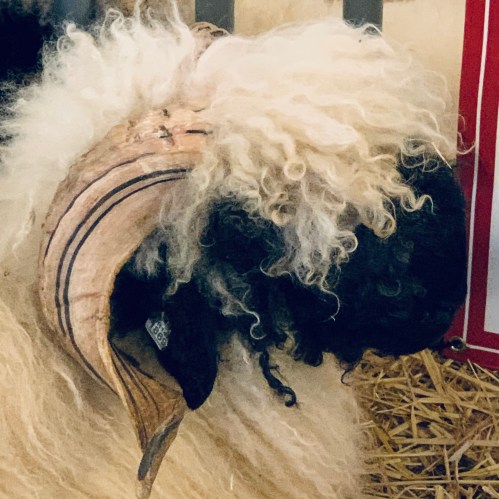
Even horns are beautiful.

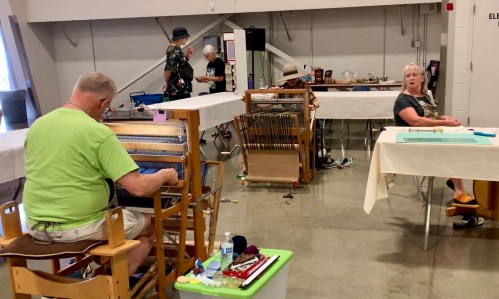
There was a sheep to shawl exhibit from 9 am to 2 pm.
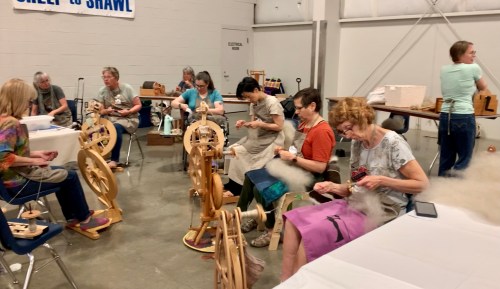
Carding, spinning, plying
Weaving!

And the fiber work exhibits were beautiful.
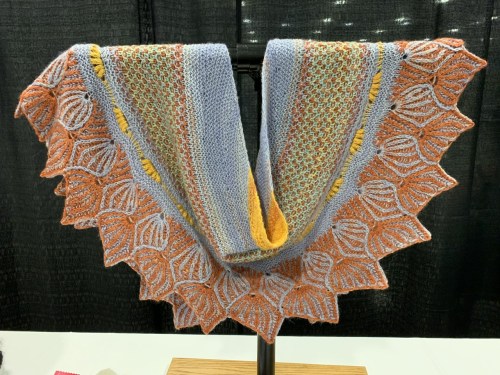
This shawl by Lucy Swift was my favorite piece in the exhibits.

All right, back to knitting! I’m knitting another sample of the leafy brioche cowl now that I have it figured out. I need to decide if I want to publish an assigned pooling/algorithmic knitting version in addition to the regular one. More on that later…
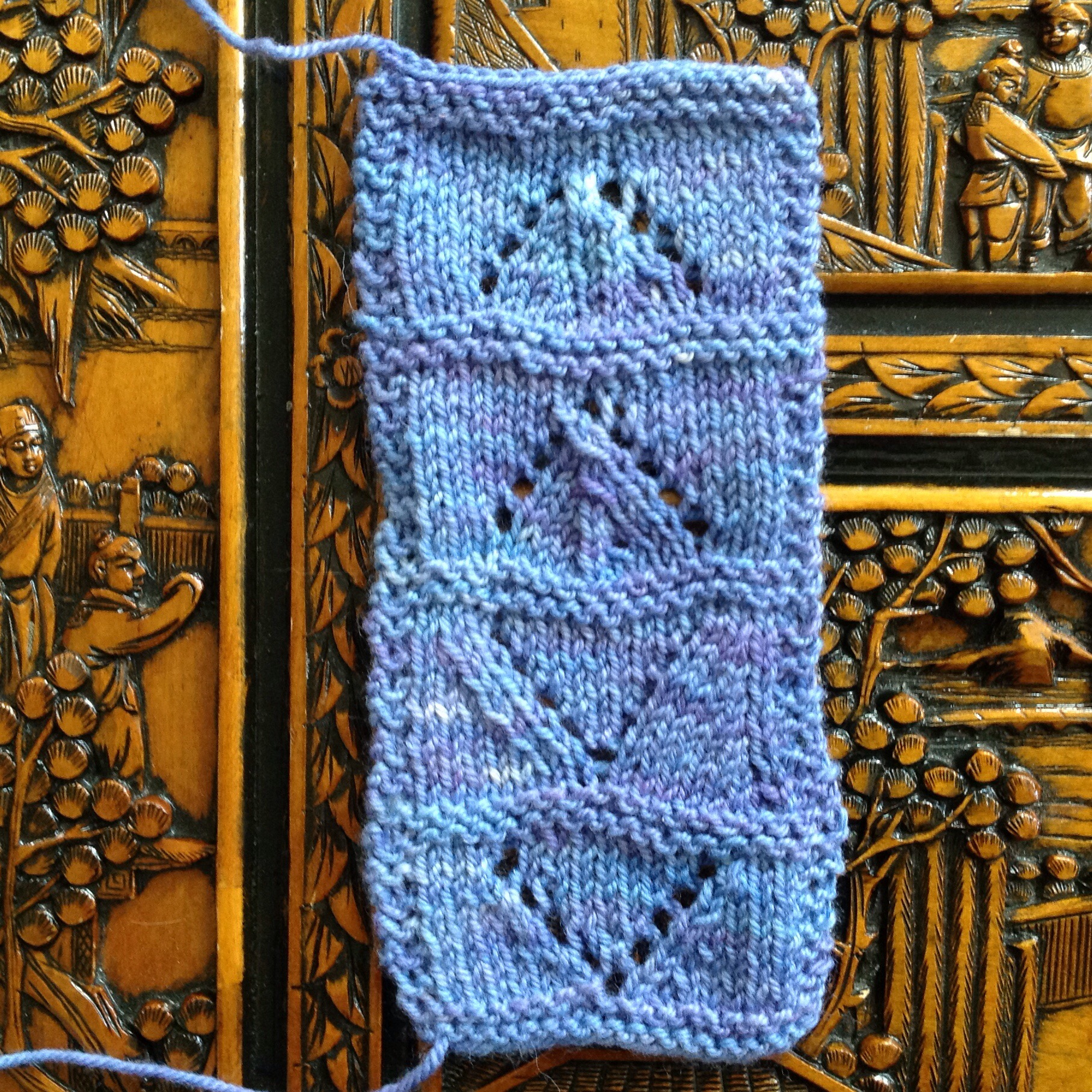
Madrona class review

I took a short trip to Tacoma to visit the Madrona Fiber Arts Festival. I could only stay for one night, so I packed in all the fun!

I had two classes. My favorite was Designing with Lace Decreases with Evelyn Clark. The very first lace shawl I ever knit was her Shetland Triangle, so I was very pleased to be in this class. Where do the decreases belong, in relation to the yarn overs? Which decrease should you use? Well, it depends on what effect you want.

lace sampler

So much information packed into this little swatch. Notice that it does not mirror from left to right; we had lots of effects to sample! Do you want your decreases to outline your YO? Or a softer edge? Do you want your fabric to bias? (Separate your YO from your decrease.) If that biasing bothers you, consider a project in the round, which will balance out the biasing (as opposed to straight edges that won’t stay straight).

Evelyn had lots of samples to look at, and to explain. One thing she mentioned: Scallops are always stronger at the cast on edge than at the bind off edge. I’d noticed this when I designed my Rockaway Hat/Cowl, and it didn’t matter so much in that instance, but it was nice to know it wasn’t just me. (I could have swatched, but I just knit it up and said, “Oh, hey.”) But if you want to reinforce the scalloping at the bind off edge, you might try adding beads for weight there. Or forego scallops completely, and end with something else. Also, scallops are going to be offset by half a repeat (they won’t look the same at each end of your knitting) because the peak and trough of each wave is offset.

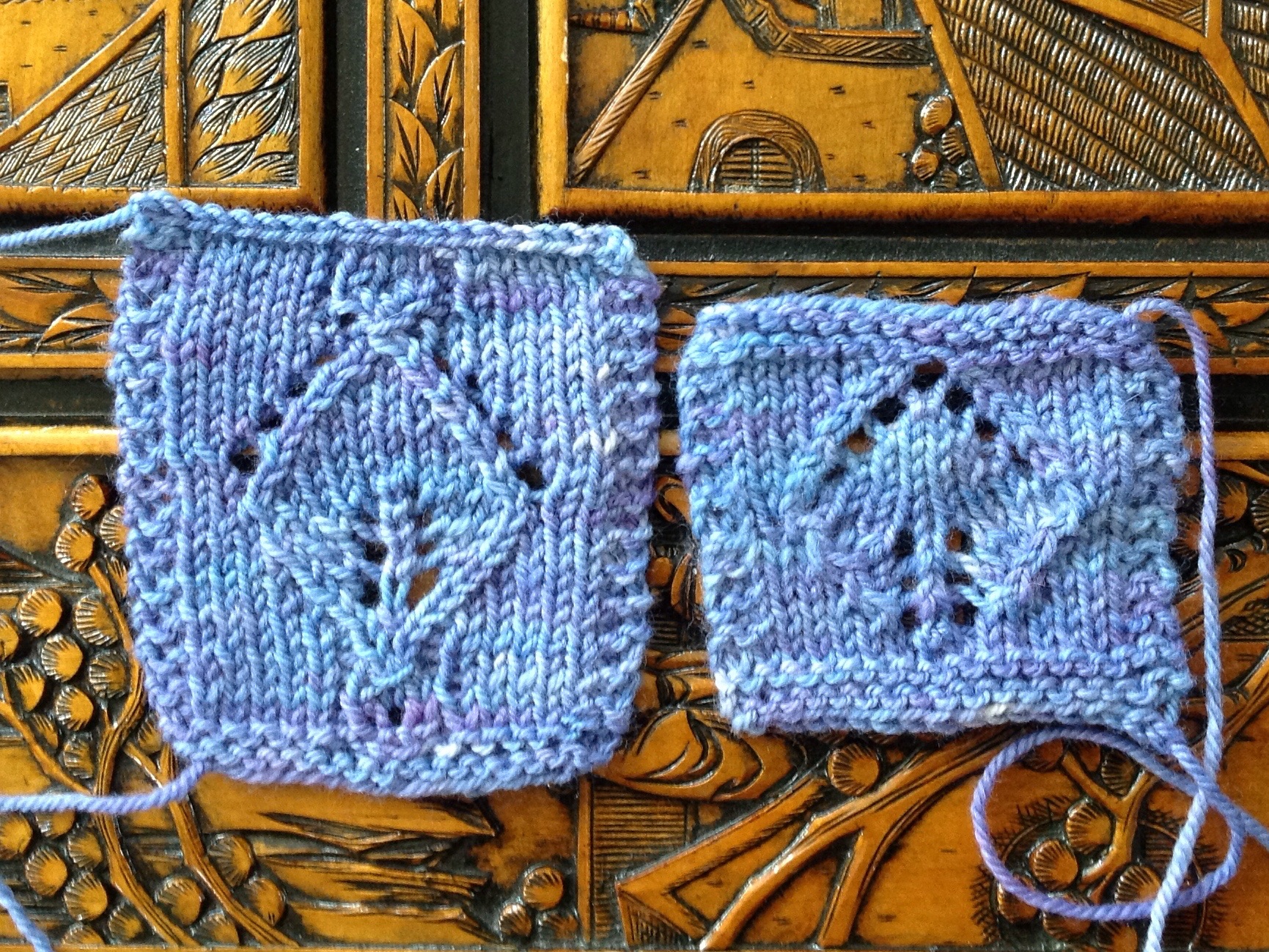
We were given the option of charting out a picture, just for fun. We talked about flipping lace motifs to knit them upside down (for top down knitting). I tried it with my leaf motif that I used in Garland. I showed it to her at the end of class, and she said that some motifs won’t work upside down, and she thought that my leaf might be one. I tried to knit it that night, but I fell asleep, so didn’t finish the flipped one.

leaf lace

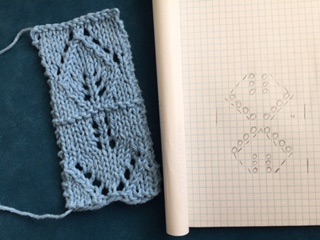
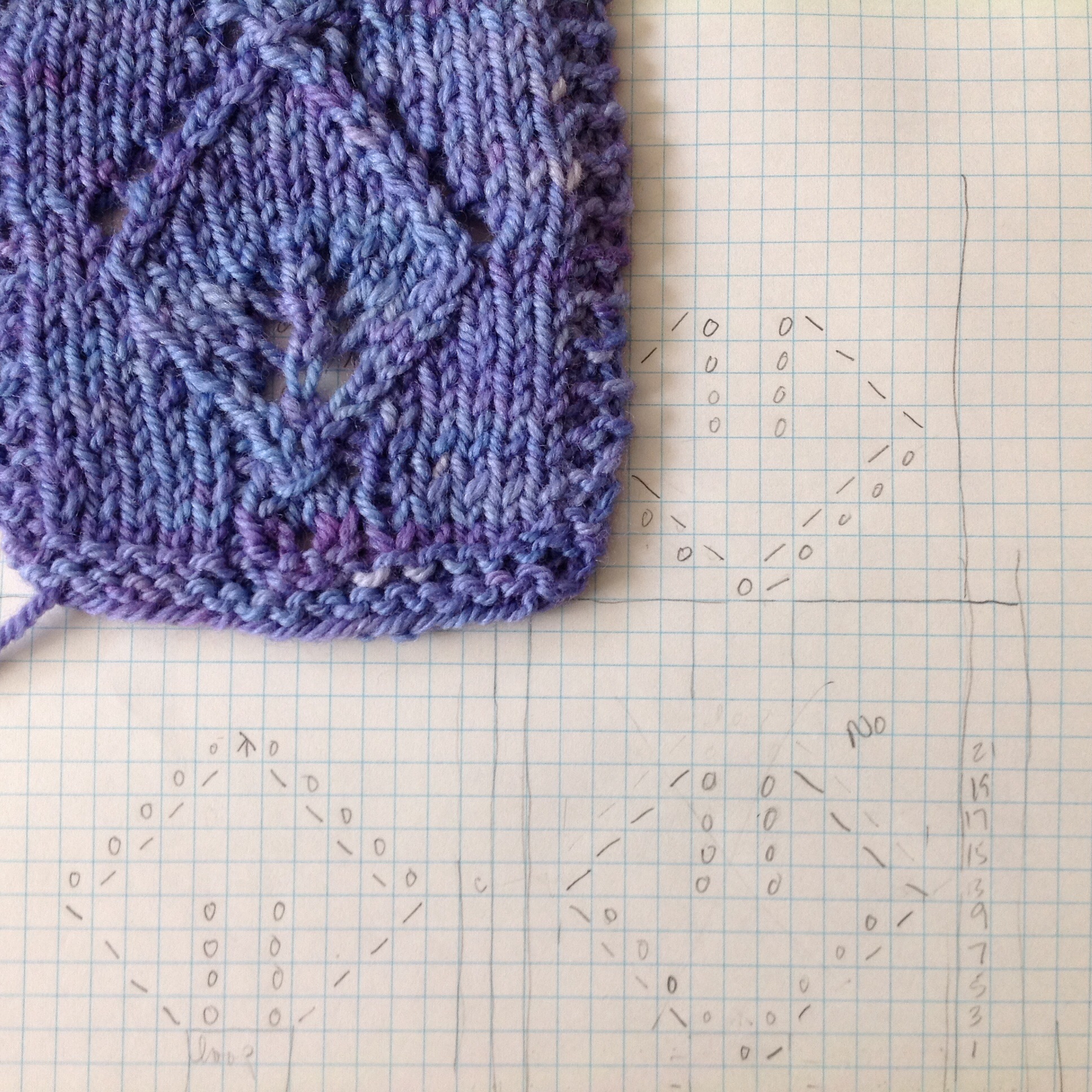
But in my email the next morning, I found one from Evelyn, saying that she had thought about it, and knit it, and it really didn’t work. She sent me a picture, and it looks like an arrow! You can’t see the decrease lines at all (bottom of swatch, top chart).

inverted leaf evelyn clark

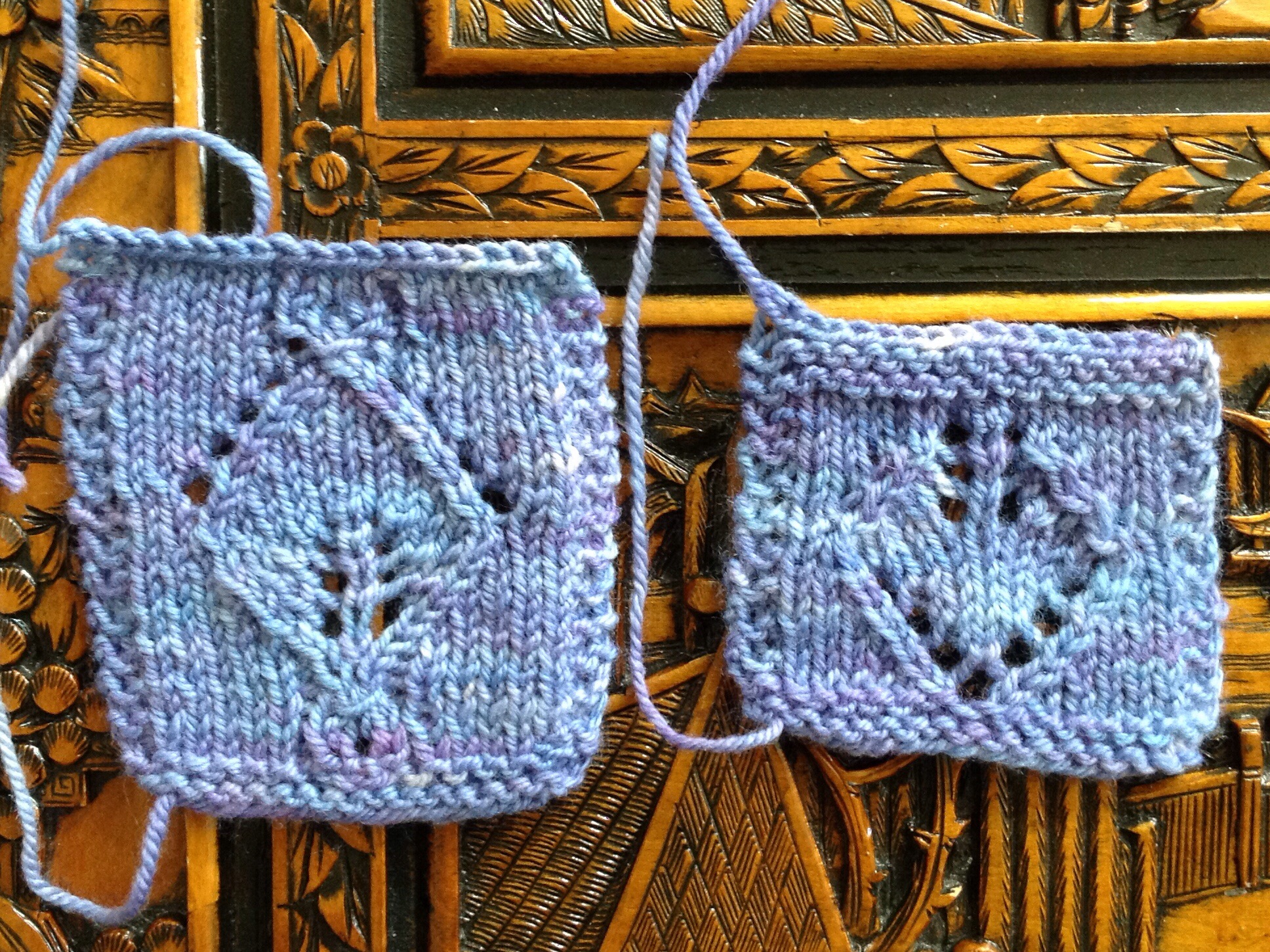
That, my friends, is a fabulous teacher. I had to figure out if there’s another way to make it work. It is completely different; I just wanted to know if I could. And that’s the mark of a great class, for it to be so thought provoking that you just have to figure it out.

inverted leaf lace knit

I had to use m1 increases and double decreases to get the lines to show up.

leaf lace flipped

It’s not pretty, but I just had to see if it could be done! Evelyn called this playing with lace “nerd knitting” and I am completely nerding out here. But it was fun.

This post is way longer than I anticipated…more in the next one.