Celebrating Brioche Knit Love

Brioche Knit Love

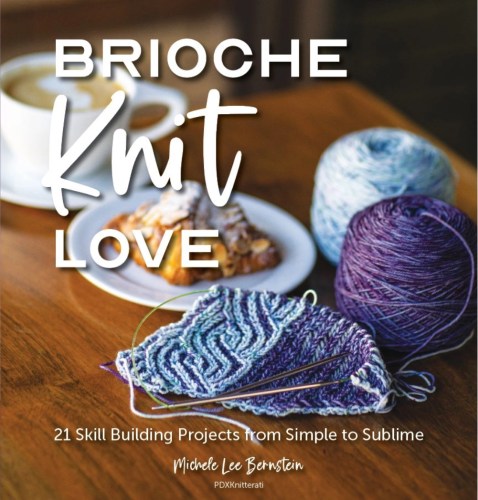
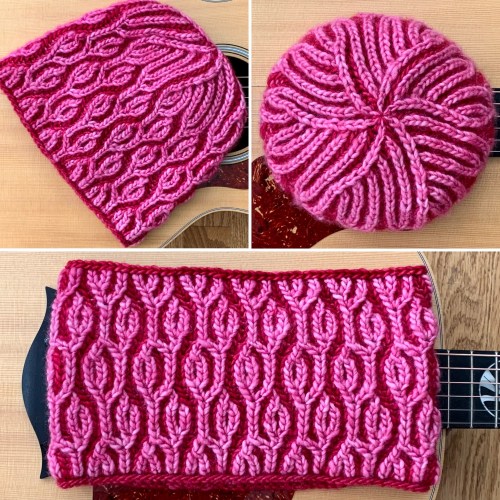
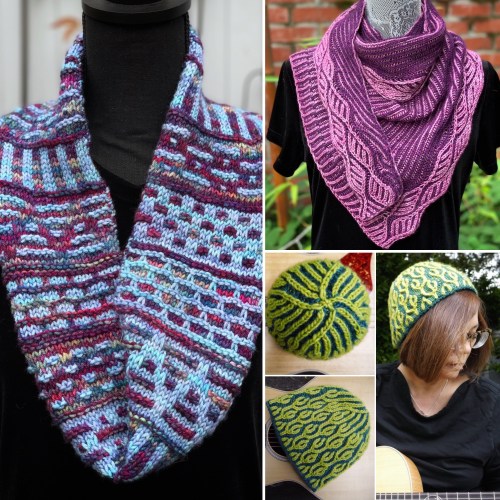
October marks the second anniversary of the publication of my book, Brioche Knit Love. I wrote it in 2021, as an extension of my love for designing and teaching brioche knitting. It’s still my favorite kind of knitting!

Seafoam Latte scarf

I’m so glad I had the opportunity to write this book. It was first published by Marie Greene’s Library House Press, which no longer exists. Since then it sold out, and I had to figure out how to keep it going.

Printing 1000 copies and running a warehouse from my home? I didn’t have the mental bandwidth for that. In May I finally figured out how to sell it via Amazon/Kindle Publishing Direct, and that works really well for me. I don’t have to mail anything myself, which is great. I also sell the books wholesale to local yarn shops, if it works for both of us. Winner!

I’ve been enjoying all the Brioche Knit Love Facebook Memories posts this month, so I wanted to share that bit of fun.

Seagull Flight

If you want a book that takes you from beginning to more advanced brioche, Brioche Knit Love is the book for you. I made video tutorials to go with the book, too, for a complete brioche experience.

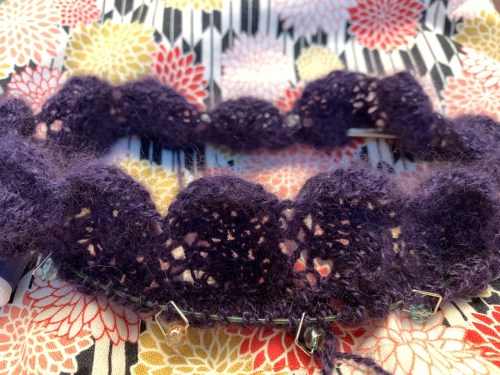
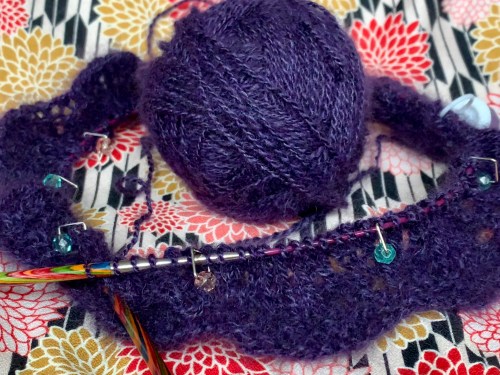
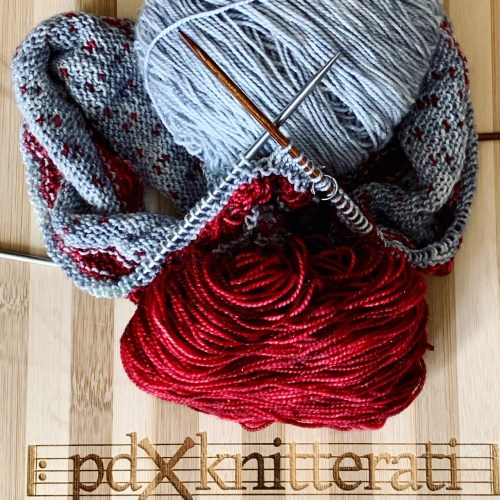
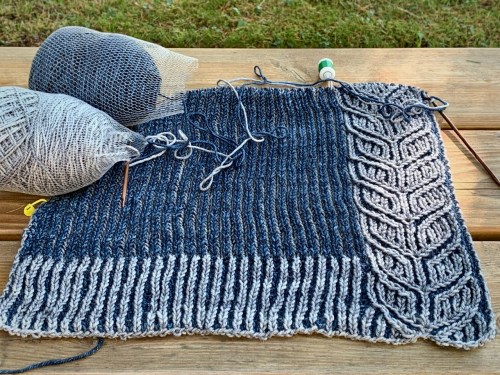
Currently on the needles: more brioche! It’s all about the syncopated brioche edges on this piece. I’m knitting with this gorgeous Anzula Lucero DK which has a bit of sparkle in it.

I’m finding that I’m on a roll with wooden needles; I really like them for a little more control than my usual stainless steel. These needles are Knitters Pride Ginger. I like the finish on these birch needles; they’re not overly slick. But not sticky, either!

Do you have a favorite type of needle? I find it depends on the yarn. For this project, these needles are perfect!

Coming soon: a bit of brioche

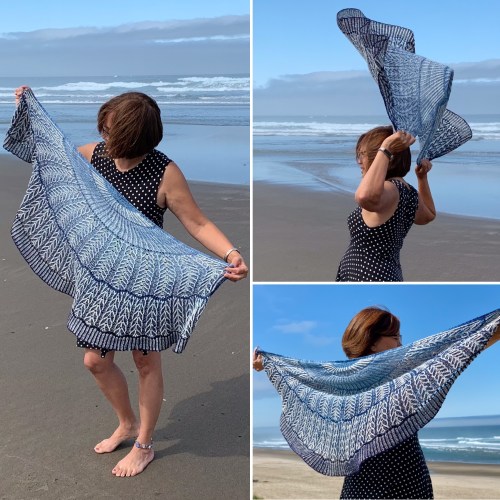
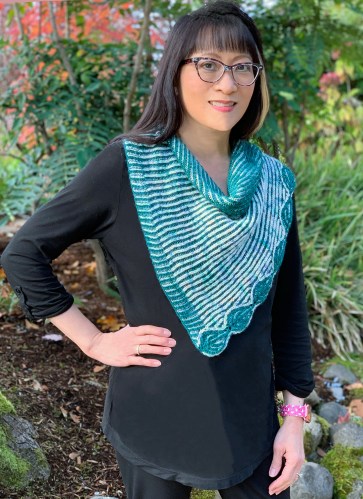
Aspen leaves on a brioche cowl

I just finished knitting the second iteration of this piece, a bit smaller than the one shown. It’s a cowl that looks like a triangular shawl. This is one of my favorite shapes, because it’s so easy to wear. No danger of falling off!

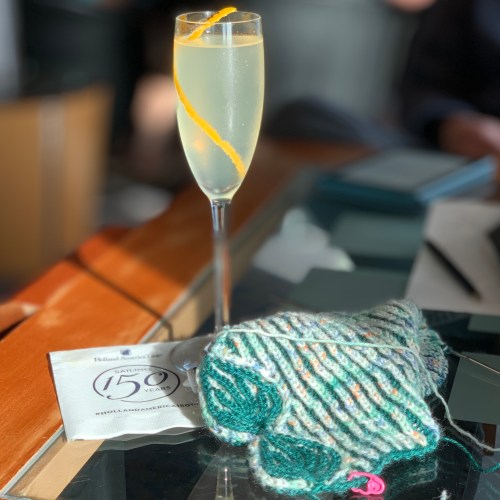
Swatching with a Dutch 75 on our Alaska cruise last month

The cowl features syncopated brioche rib, and an aspen leaf motif that climbs along the edge. It takes two skeins of fingering weight yarn in contrasting colors. I knit both sizes with my two skeins of Manos del Uruguay Alegria.

I’m looking for a few brioche-loving test knitters. Is that you? Let me know!

Introducing: Star Flower Shawl

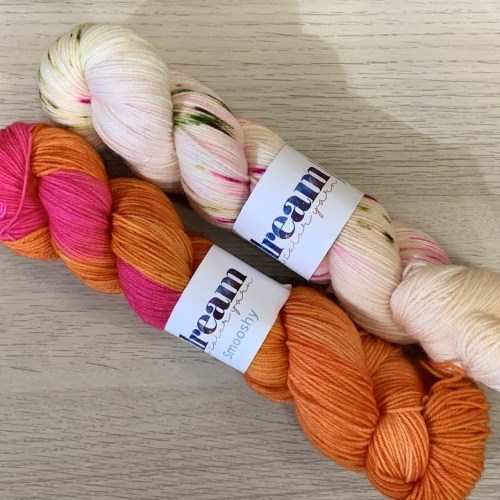
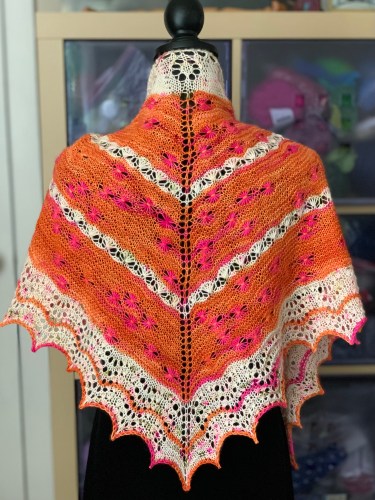
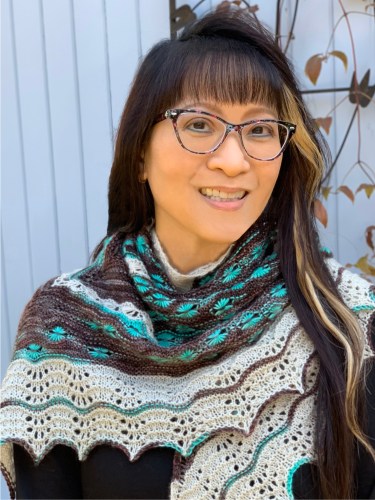
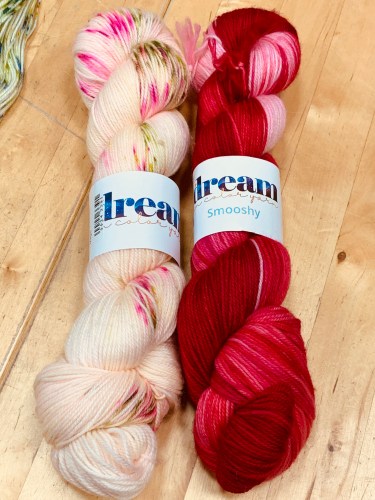
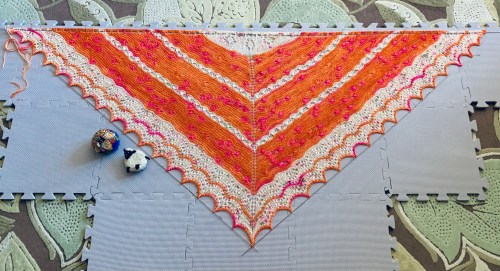
Star Flower Shawl: Dream in Color Smooshy, Tip Top Tangerine and Sonoran Magic

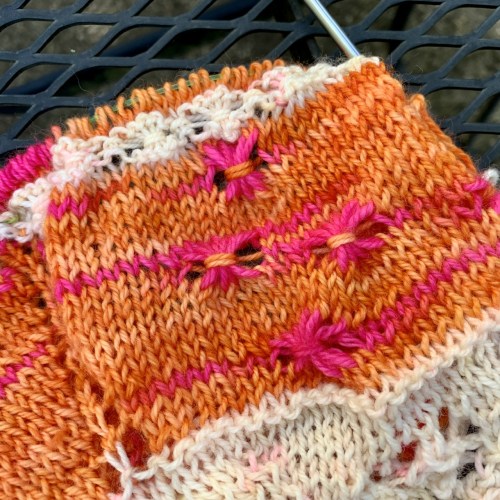
This gorgeous shawl has been in the works since last spring! I wanted it to be absolutely perfect, and let the yarn tell me what it should be. The first idea was a whisper, and I refined it several times until it sang out. The shawl features flowers and assigned pooling stars (or are they flowers, too?) on a garter stitch background. I love that it has more than just assigned pooling; lace adds a harmonious counterpoint. And it’s an answer to several knitters who wanted a shawl instead of a cowl.

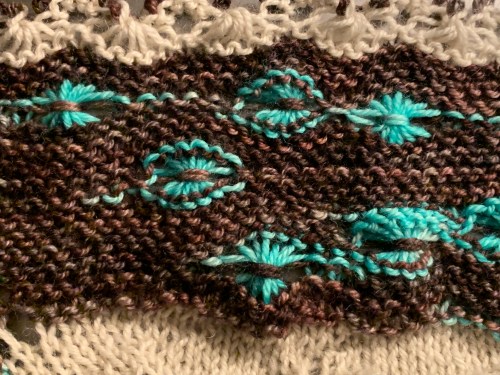
Star Flower Shawl: Dream in Color Smooshy, Bali Wood and Rabbit Ears

Choose two 420 yard skeins of fingering weight yarn and enjoy the star show! I loved choosing these color combinations in Dream in Color Smooshy.

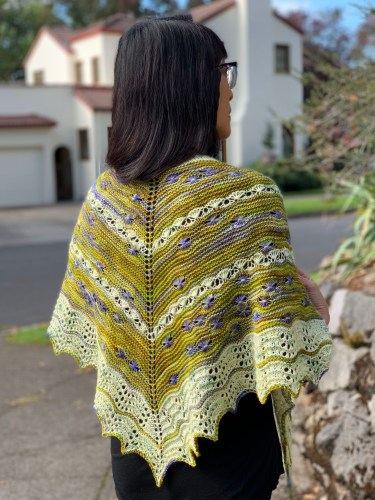
Star Flower Shawl: Dream in Color Smooshy, Violet Fields and Lime Ice

So much so that I helped test knitter Ann Berg pick these for her version, too!

Pink Pop and Sonoran Magic would also be lovely!

The Star Flower Shawl pattern is available through Ravelry, link here.

It’s also available through Payhip, link here.

Use coupon code SHINE through October 25, 2023 for 15% off the pattern on either site. Edit: I’m extending this to October 28, 2023 because I forgot to post to Instagram before Rhinebeck weekend, and it got a little lost!

Thank you to tech editor Jen Lucas, test knitter Annie Berg, and model Sharon Hsu.

Three lacy flowers at the center neckline
Star Flowers

This combination made me think of meteor showers amid the Milky Way. What do you want yours to be?

A little more OFFF

The marketplace at Oregon Flock and Fiber Festival opens on Saturday. Friday is a quiet day, just classes and a lot of setup.

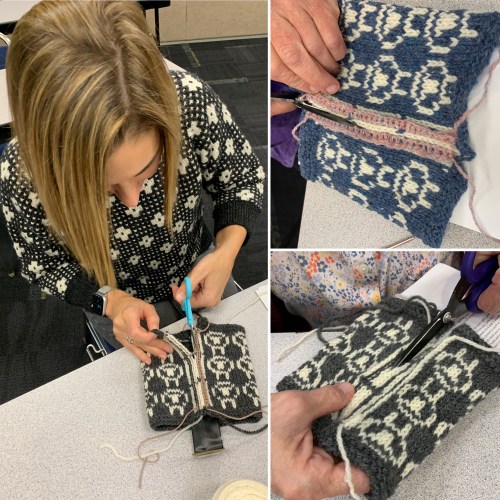
Some of the steekers

You have to make your own excitement, and we did that in the morning by reinforcing and cutting steeks, eek! (And I see that my students are suggestible, using the same colors I did in the Sheepy Steeky Coasters pattern!)

We had the assigned pooling class in the afternoon, which is another kind of excitement. I think of these skill builders as party trick knitting.

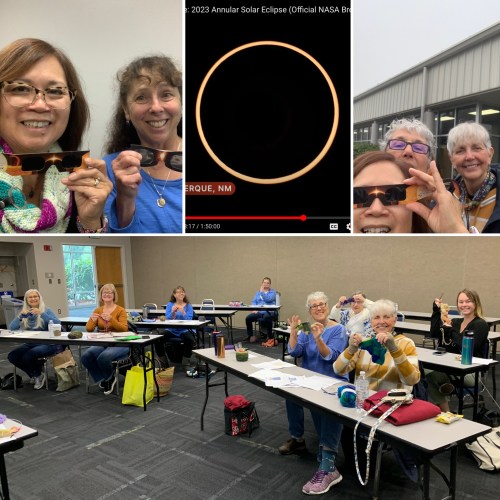
On Saturday morning, there was a complete annular eclipse (95% of the sun blocked by the moon) right after class started. Unfortunately it was foggy AND cloudy in Albany, so we just saw gray sky. Five percent of the sun’s light is still a lot of light; we didn’t really see any difference, although Karen and I were ready with our eclipse glasses. Mine were leftover from the 2017 total eclipse.

We went back in for the Minerva Entrelac class. The party trick in entrelac (besides the entrelac), is knitting back backwards without turning your work. It’s a great skill to have when your rows are only 8 stitches long!

I didn’t have an afternoon class, so I made a quick tour through the market and the exhibits. (I had to get home to deal with some…stuff, so I didn’t get to visit the animals in the barn. Next time.)

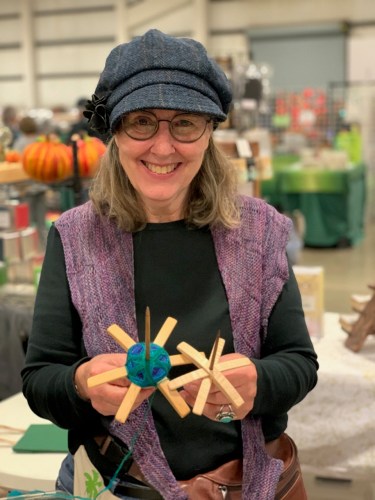
Wanda Jenkins

Wanda called me over in the market to show me Ed’s newest spindles, the Merlin (left). It has 6 legs, and it’s magical. The smaller one on the right is so new that it’s still being worked out. Ed Jenkins makes the loveliest Turkish spindles.

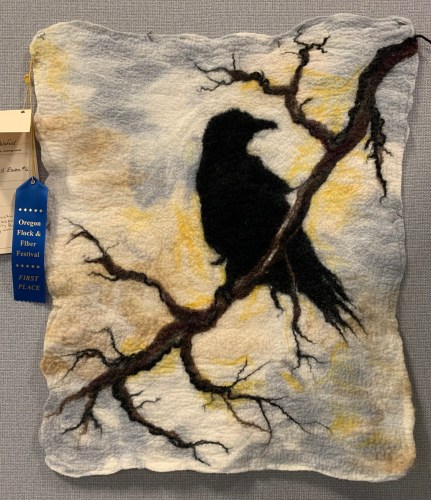
My favorite pieces in this year’s Fiber Arts Exhibit were felted!

Wet Felt Raven #6 by Mady Wolsfeld

I love the raven, and the moody sky behind it.

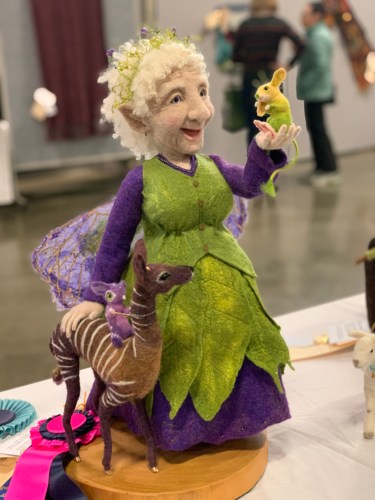
Maisie’s Menagerie by Dana Nishimura

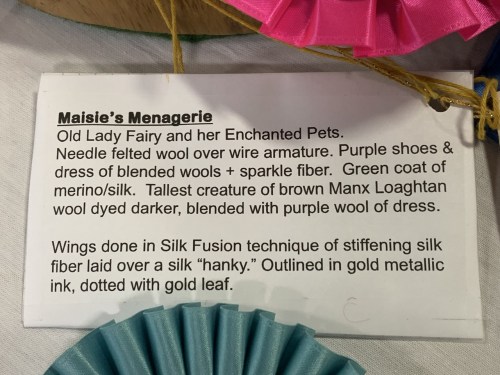
This piece took the Grand Champion Award. Here’s the description:

A lot of work and an impressive FO.

As I said, I didn’t have much time to spend, so that’s my abbreviated OFFF report for this year! Did you go? What did you love?

Assigned pooling kits!

Update: I have requests for more yarn than I have left. I’ll go through my email and let everyone know if I have yarn for them. Thanks so much your interest!

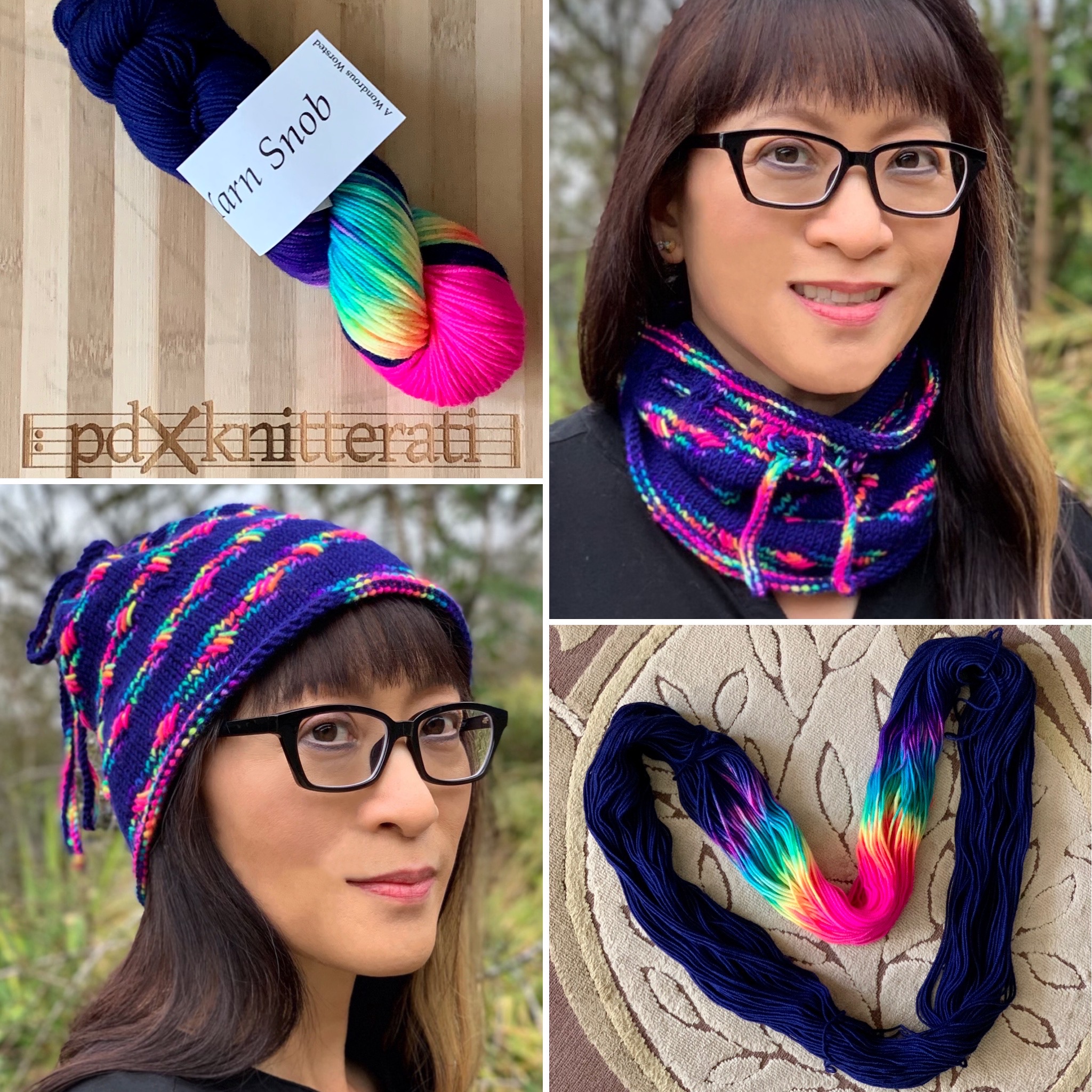
I’m back from Oregon Flock and Fiber Festival; I enjoyed teaching and a quick spin through the market and exhibits. But first: I have a bit of extra yarn from my pooling class, and wanted to offer it in kits with my patterns that go with it. The kit includes 1 skein of Yarn Snob’s A Wondrous Worsted in the Times Square colorway and download codes for my TWO patterns that were designed with it. You get to choose which project to knit!

Pooling is a Cinch (hat and cowl)
Firefly Trails Cowl

The kit is $36 including shipping to USA addresses. The retail value of this kit before shipping is $43 (yarn and two patterns). Interested? Please leave a comment and I’ll email you back. (You can tell that kits are not my usual business; I’m not set up to do this automatically.)

Pooling really is a cinch! Here’s longtime OFFF volunteer Sue, happily pooling away during class. You can do it, too!

More on OFFF when I catch up with myself…

Classes, in person! and online

Class at Hook and Needle Fiber, Vancouver WA

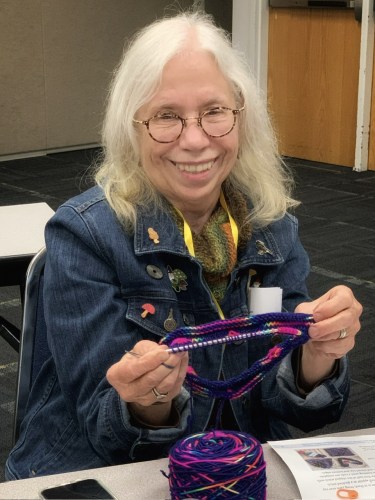
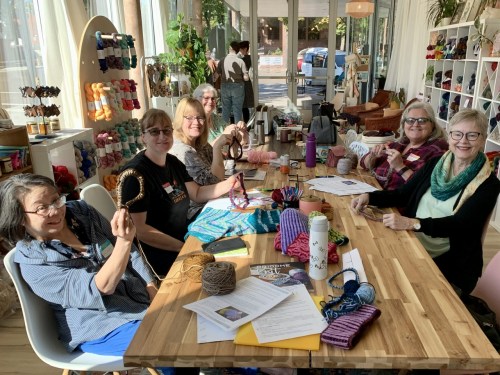
Over the past 4 years I’ve taught a lot on Zoom, and a little at select retreats and events. This past weekend, I taught in person at a local to me LYS, which is the first time since 2020. We had a good time with Petite Brioche! (I didn’t think to take a picture til after class, so not all 9 students are pictured, oops.)

Brioche Pastiche, Cap and Cowl

I’ve just listed the followup to that class at Hook and Needle Fiber. It’s on Sunday Nov. 5 at 1:30 pm. We’ll be using my Brioche Pastiche pattern for a gentle introduction to brioche increases and decreases. Register here. Come knit with me!

Thrumbelina slippers

I’m also teaching the Thrill of the Thrum in-person at For Yarn’s Sake in Beaverton OR on Sunday Oct. 22 at 1:30 pm. These ridiculously cozy Thrumbelina slippers are fun to make. Class is sold out, but check to see if there’s a waiting list.

Oregon Flock and Fiber classes

I’m teaching at Oregon Flock and Fiber Festival in Albany OR on Oct. 13 and 14. Friday’s classes are Sheepy Steeky Coasters (your first steek!) and Assigned Color Pooling. Minerva Entrelac Cowl is Saturday morning’s class, and we may take a break in the middle of that one for the annular solar eclipse. Bring your eclipse glasses!

Virtual VKLive October classes

Not local to me? I’m also teaching for Virtual Vogue Knitting Live Oct. 27-29. I’ll be teaching slip stitch knitting (Slip Away Cowl), Brioche Pastiche, and syncopated brioche (Syncopation Shawl or Scarf), and giving a lecture: Blocking: It’s Magic! Registration opens tomorrow; you can preview classes today. Scroll down to find the right event; there’s a lot going on including registration for January’s big show, VKLive NYC.

It’s shaping up to be a fun month! Are you knitting more, now that it’s fall? Or spring, depending where you are? I knit year round, but I feel like fall is the beginning of the year. Birthday, school year, a chilly great awakening. What’s on your knitting bucket list for learning this year?

Alaska cruise part 2: Salmon and totems

(I don’t have the photoshop skills to make it look like this orca is leaping from the water behind DH, so I’ll just let you imagine that it’s happening, while he obliviously checks his social media accounts. It’s a running joke.)

Icy Strait Point is at the lower end of Glacier Bay; you pass by going in and out. There used to be a cannery there dating from 1912, run by the Hoonah tribe. The town of Hoonah is about a mile away. Icy Strait Point as a cruise port was built specifically for the cruise trade, and is only open when a cruise ship is in port. There are three restaurants and a gondola ride to a higher gondola for a zip line tour. And a cannery museum and gift shop (of course). I was particularly interested in seeing the cannery museum, so I could show DH just what it was I was doing way back when.

This photo felt nostalgically like cannery home…

Our cannery on Kodiak Island canned mostly red (sockeye) and pink (humpies!) salmon. I never knew what the fish looked like; I worked up in the egghouse processing and packing salmon roe to send to Japan. I could identify which kind of salmon the eggs came from, though! The chum/keta eggs were the biggest, and you could sample the brined eggs right off the conveyor belt.

There was no reference to salmon eggs in the cannery museum, so I had to be satisfied with the fish cannery displays.

After the salmon heads were removed by machine, pullers removed the egg/milt sacs, and then the slimers cleaned the inside of the fish (oh, the sliming knife…). The butchering machines were known as Iron Chinks, because they replaced Chinese workers at the beginning of the 20th century and made the canning work much faster. Yes, it’s an offensive term. That’s history. I heard it when I worked in the cannery, and we heard it referred to in a cannery documentary that we watched at a museum in Ketchikan.

18 year old me, in the egghouse

We (my friends and family) always called them lines: How many lines are we running today? We could process anywhere from 40,000 to 120,000 fish per day, given enough overtime. We made our money on overtime, and there was nowhere to spend it. The cannery was the only thing on Alitak Bay at the end of Kodiak Island; we arrived for the summer by seaplane from Kodiak, and lived in bunkhouses and were fed in mess halls. We made friends and had dance parties! I worked in the egghouse for five summers, and that’s how I paid for college.

Cleaning the fish (not real fish here!)
Canning line
Retorts, or pressure cookers
Labels display

It’s a very far leap from egghouse girl to knitting designer/teacher!

On to Sitka!

St Michael Cathedral

Sitka was the capital of the Russia’s Alaska colony from the 1700’s until 1867; it was called New Archangel. This building is a reconstruction of the original 1848 building which burned in 1966. Sitka is still the Seat of the Diocese of Alaska for the Russian Orthodox Church. This building is part of the Sitka National Historical Park, as is the Totem Trail we visited.

Bicentennial Pole

The Bicentennial Pole stands in front of the Visitors Center. It was carved by Duane Pasco, who won a contest to depict 200 years of Pacific Coast Indian cultural history. Read from the bottom up: The Native people before the arrival of Europeans, Raven and Eagle (the Tlingit moieties or clans), the arrival of Europeans (see the firearms?), and the top figure representing the Northwest Coast Indians of today.

History Pole depicting the first people to occupy the Sitka area.
Cormorant Memorial-Mortuary Column

I thought this was a raven, but further research indicates that it’s most likely a cormorant. It’s a recarving by Tommy Joseph; the original pole was obtained in 1903 from a Tlingit village (that sounds ominously colonial, and it probably was).

We actually went the wrong way on the Totem Trail loop, so we didn’t see as many totem poles as we had planned to. But it took us to a footbridge over the Indian River, which was full of salmon headed upriver to spawn. Or perhaps they were spawning right there.

Helpful interpretive sign!

Walking to and from the Totem Trail, we saw salmon jumping in the water.

Back to the boat!

The VK knitters joined the Holland America knitters meet up in the art studio. This is on the 11th floor, off the Crow’s Nest lounge which looks out front.

The next day we visited Ketchikan, which was my favorite town. (Glacier Bay was my favorite stop overall.)

Creek Street, on Ketchikan Creek

I liked that you could see how the town had grown up on the creek, and that they have tried to preserve it. The green house is a preserved bordello, Dolly’s.

We saw salmon heading upstream, and a hungry seal planning its dinner.

I had a great visit at the yarn shop, Fabulous Fiber Arts and More. We also visited the Tongass Historical Museum, which showed Alaska’s history as a Native fish camp, mining hub, salmon canning capital, and timber town.

Can you tell that I like science, history, and museums? The National Parks app was a great help on my phone. Cruise ports are full of souvenir and jewelry shops, which don’t interest me. But I can figure out how to have a good time anyway!

We spent the rest of that day cruising to Victoria, British Columbia. We were in port from 8 to 11:30 pm, so we opted to stay on board and pack. The next day we spent at sea headed back to Seattle, so it was time for another knitting class. Ana and I swapped students, and we now have more brioche knitters, and Portuguese-style knitters too.

Knitting and looking for orcas
Dutch 75 (French 75 with Dutch gin and a sexy ORANGE twist)

This bit of brioche was my social knitting for the cruise. It’s not hard, basically brioche rib with just a little bit of thinking at the edge. It turns out this is just a swatch; I’m playing with a design idea and the rib needs shaping, and a different needle overall. But it was great to have on this cruise.

I really enjoyed this trip! I hope you enjoyed the travelogue. Onward!

Alaska cruise part 1: Glaciers!

A travelogue post! With a bit of knitting…

I had the pleasure of teaching on the Vogue Knitting Alaska Cruise earlier this month. I hadn’t been to Alaska since working five summers in a Kodiak Island cannery to pay for college, so I was looking forward to seeing more of the state, and not being covered in fish slime.

We sailed on the Holland America Eurodam, which can accommodate 2000 passengers. This is a nice sized ship, not overwhelming, but big enough to have lots of options for dining and amusements.

Veranda stateroom

DH came with me on this trip. Can a marriage survive a week sharing a room this size? Sure! Just don’t make me share a closet! One of us is tidier than the other…

With co-teacher Ana Campos

It was still summer when we sailed out of Seattle, and we made the most of it!

Happy knitters on the aft deck
We love brioche!

The next day was spent at sea, which meant there were no distractions from knitting class. Except for the orcas that we missed because we weren’t watching for them.

Laura began the increases and decreases by the end of class, and she finished her hat before the end of the cruise. Well done!

Lunch and knitting

This was the one day that the seas were a bit rough (because we were on the ocean rather than in the Inside Passage), so I treated myself to a lovely lunch of ginger ale and some random pretzels from my travel bag (Alaska Airlines, maybe?). And Dramamine. Yum! Things smoothed out a few hours later.

Juneau was our first stop, the next morning. Friends Tim and MJ were on this cruise with us too. Tim was in our wedding 41 years ago. Time flies! My two goals for Juneau: To visit a yarn shop for qiviut, and to see the Mendenhall Glacier. I’m a science nerd.

Mendenhall Glacier and Nugget Falls

It takes 200 years for ice to move from its beginning as as snow on the Juneau Icefields to the terminus of the glacier at Mendenhall Lake.

Stunning. It really is a river of ice. And it’s huge.

It’s an easy walk to Nugget Falls. The visitors give you a better sense of how big the glacier and falls are. I met a man the next day who had taken a dip into the lake below Nugget Falls; he’s a fan of ice baths. Brrrrrr no thank you! But he did help me spot mountain goats with my binoculars.

Iceberg with ice birds (zoom in)
Touch it!

It’s someone’s job to put glacial ice samples under the sign every day. These are the things I think about…

The next day we cruised Glacier Bay. This is a national park and preserve, and park rangers came on board to narrate the day. This was my favorite day of the trip.

Fairweather Range
Reid Glacier inlet
Lamplugh Glacier
Gilman (left) and Johns Hopkins Glaciers

The face of the Johns Hopkins Glacier is 250 feet high.

We saw several calvings (ice falling from the face of the glacier)

The Johns Hopkins Glacier has been off limits to cruise ships for most of the summer, to protect the harbor seal pupping grounds. The pups spend their time on ice floes, safe from predators. This visit was the first for the Eurodam since the beginning of summer.

See the pups? (hi-res photo so you can zoom in)
Better?

I took this last photo through my binoculars, and cropped it. All for you, dear reader!

Selfie (ussie?) on the veranda with Johns Hopkins Glacier

All in all, a spectacular day. But the fun wasn’t over. The Eurodam serves tea every afternoon at 3 pm, so we had a Knitters’ Tea. Bonus points if you decorated a hat (supplied by VK) for it.

And it happened to be my birthday, so there was a bit of cake, too.

Happy birthday to me, with an Indonesian happiness song from the wait staff

This post has gone long, so I’m going to end with this glacier day, and begin another post with salmon, another Alaskan treasure.

Onward!

Thrumbelina class, in person

Thrumbelina Slippers

This is a correction: My Thrill of the Thrum class at For Yarn’s Sake is AT For Yarn’s Sake, not on Zoom! October 22, 1:30 pm Pacific. There’s one spot left; is it yours? Register here!

Thrums are such a tactile experience, they’re much better in person. We had decided that when setting up the class. And then I typed the wrong thing. Come knit WITH me!

Slip Away Cowl update

Slip Away Cowl

I just updated my Slip Away Cowl pattern. I’ve added a bonus stitch pattern, Zig Zag Lightning. It uses a nifty cable stitch to zigzag the slipped stitches.

Zig Zag Lightning

I also updated the single garter stitch edge to a 2 stitch knit-in i-cord edging. I really like it; you can see it on the edges of the swatch above. You probably won’t see much of it when the cowl is worn, but it’s a great skill to have in your knitting toolbox. It’s not just for slip stitch knitting. It looks especially nice on garter stitch.

Slip Away Cowl

I enjoyed knitting this new sample, after I finally settled on colors. This is English Rose and Liquidambar in Malabrigo Rios.

I originally designed the Slip Away Cowl as a teaching piece. The cowl is knit with two colors of worsted weight yarn. It features six easy slip stitch patterns; you get fun colorwork while using just one color per row. It’s knit flat, and then joined together at the end. This is a great way to get your cowl to be exactly the length you want. This is my favorite cowl length for wearability. The pattern includes tips on using these stitch patterns in the round, too.

The updated Slip Away Cowl pattern is available on Ravelry and Payhip. If you purchased this from me (not The Knitting Circle) previously, you’ll see the updated pattern available to you there. I’ll leave the original pattern there too, in case you prefer the previous garter edge. If you’re new to Slip Away, use the code SlipSlide for 20% off, through September 25, 2023.

Dotty Bed Socks

If you love slip stitch, also consider my Dotty Bed Socks. They’re a quick knit in worsted weight yarn; I used Malabrigo Rios for these, too. They’re knit from the cuff down, and have a flap and gusset heel turn. Magic! You can knit the top of the instep in either Dotty or stripes; instructions for both are in the pattern. The Dotty Bed Socks pattern is available through Ravelry and Payhip. Use the code SlipSlide for 20% off, through September 25, 2023.

I do love knitting with two colors, one at a time. It’s like…brioche! Which is on my needles again, finally. More on that, soon.